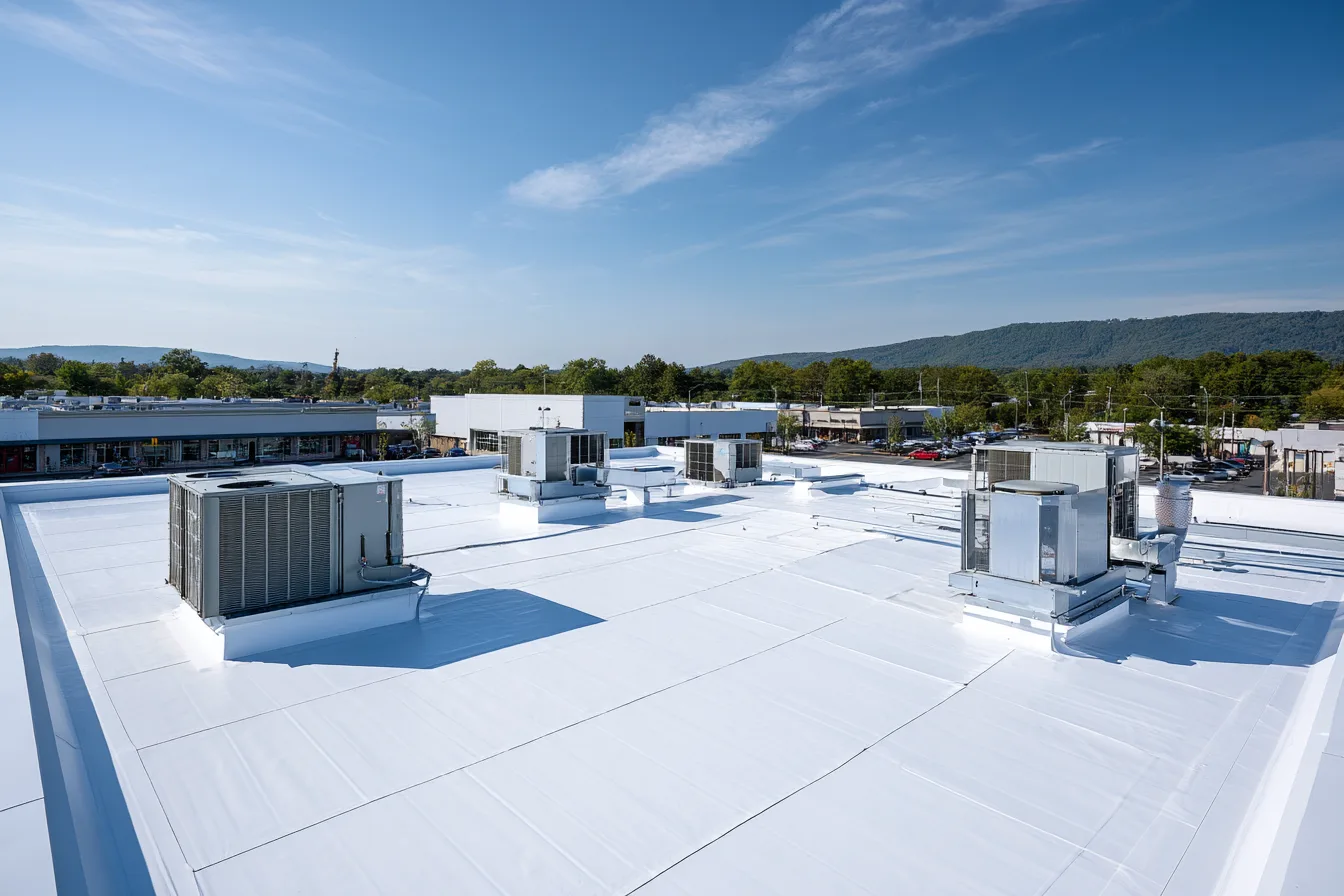
TPO Roofing in Fairview, TX
TPO roof repair and replacement help for Fairview commercial properties. Start with the existing membrane, its seams and the assembly beneath it.
Free roof inspections for Fairview homes and commercial properties.
TPO roofing decisions for Fairview buildings
TPO is a thermoplastic single-ply membrane used on low-slope roofs. Sheets form a continuous covering through welded seams, with details around curbs, drains and penetrations. The membrane is part of a roof system that also includes attachment, insulation and the supporting deck.
A white roof is not enough to identify TPO. Other materials can look similar, and the correct repair depends on the actual membrane. Known product records are useful, but an unknown system is a normal reason to request an inspection.
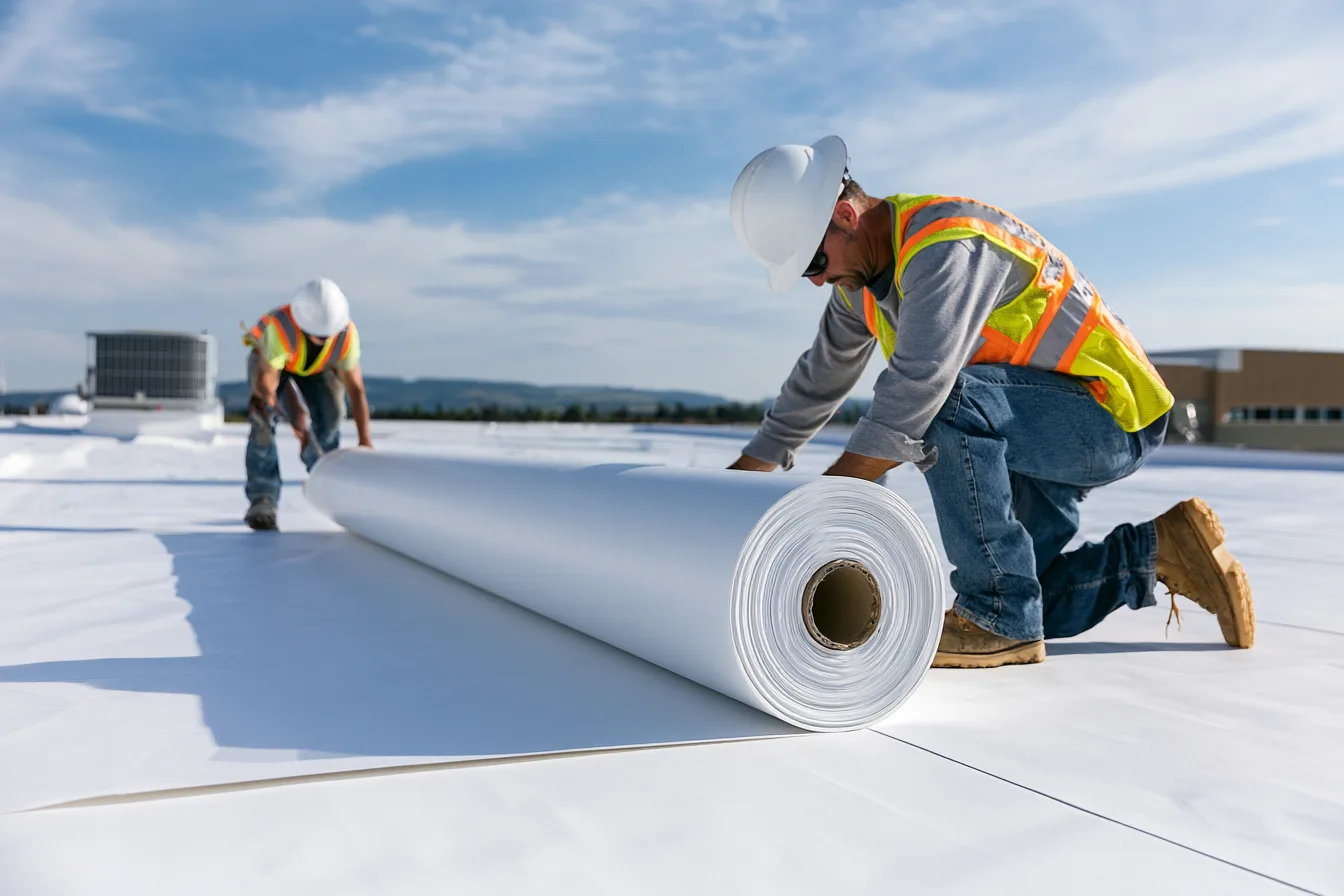
How a Fairview TPO roof is put together
Knowing how the roof was built tells you where to look when it leaks and what a replacement has to include.
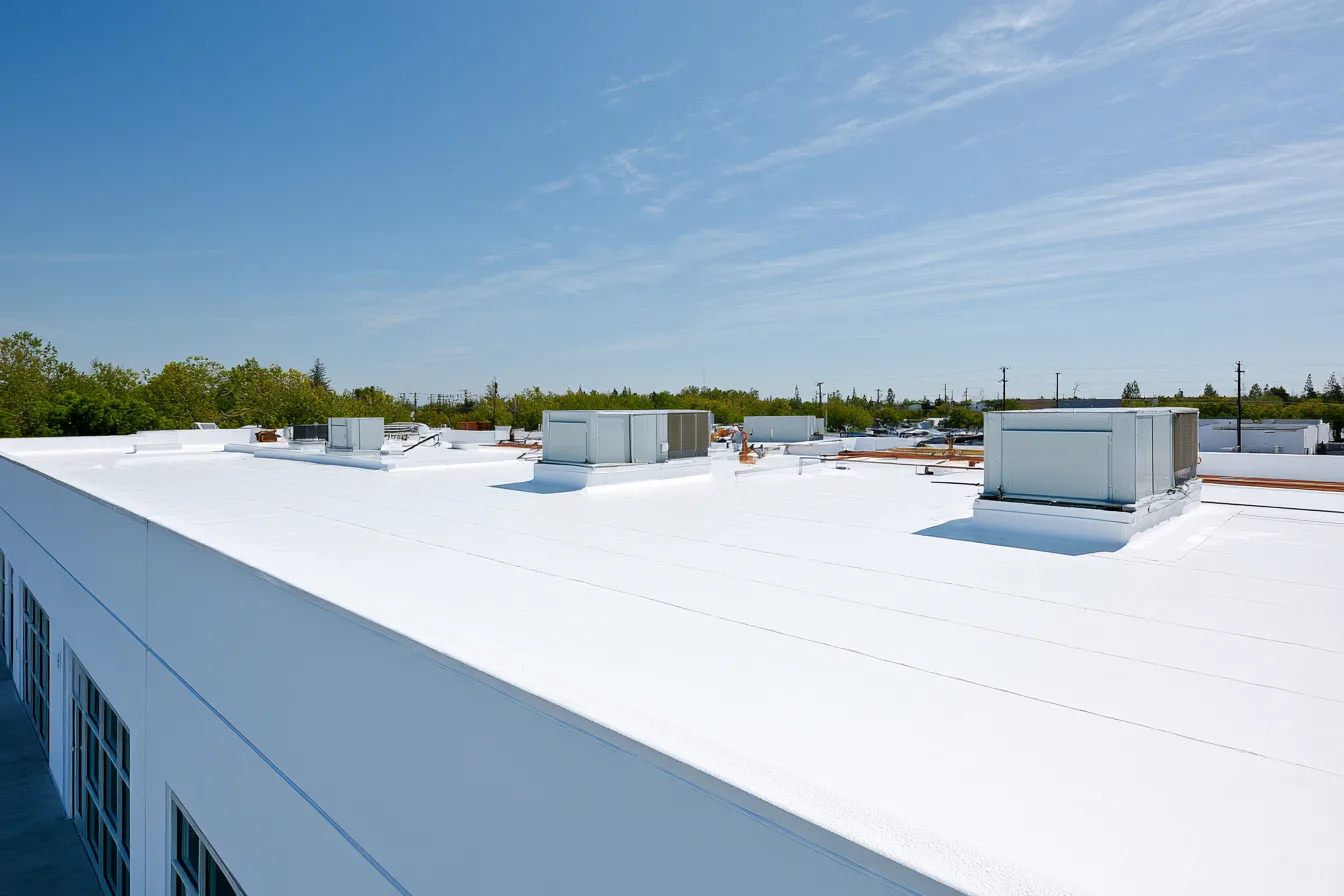
Insulation and cover board
Rigid boards are fastened or glued to the deck. They set the roof’s energy performance and give the membrane a firm, smooth surface. Boards that have been wet need to come out.
How the membrane is attached
A mechanically attached roof is held by rows of screws and plates hidden inside the seams. An adhered roof is glued down across its whole surface. Fastened sheets can flutter in high wind, which works the seams over time. Adhered sheets lie quieter and depend on a clean bond.
Welded seams
Sheets are overlapped and fused with hot air into one continuous surface. A good weld fuses two sheets into one. A cold weld, one that never fully fused, can hold for a while and open later, so seams are probed along their edge during an inspection.
Curbs, pipes and walls
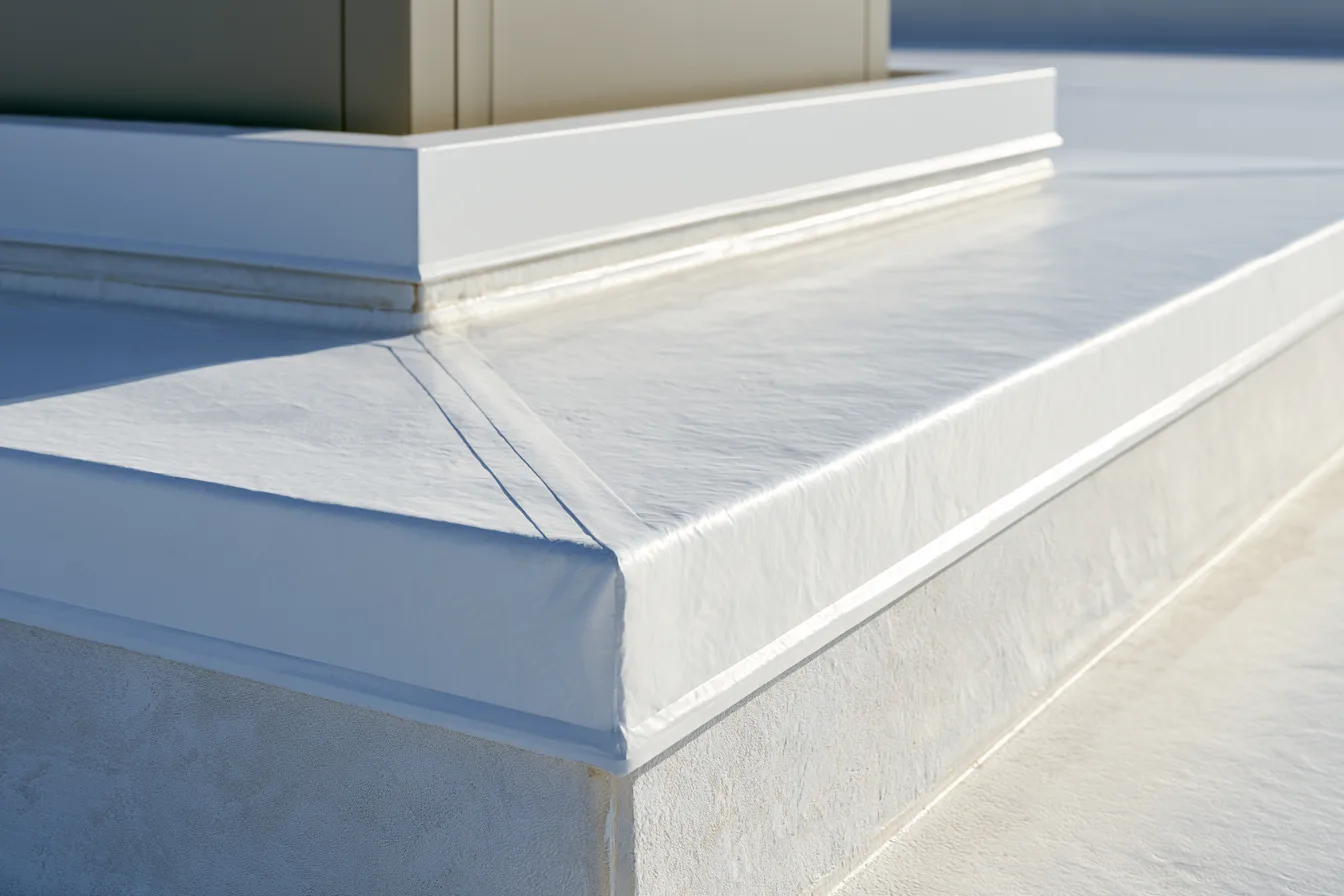
At each rooftop unit the membrane turns up the curb and is sealed at the top. Pipes get preformed boots or field-wrapped flashing, and inside and outside corners get welded patches. These hand-worked details are where workmanship shows.
The roof edge
At the perimeter the membrane is secured with a bar or wrapped under metal coping. Wind loads are highest at edges and corners, so loose edge metal is checked on every visit.
Seams and rooftop details on Fairview TPO roofs
A seam joins two sheets. At a rooftop unit, the membrane changes direction and has to continue the waterproofing up the curb. Pipe penetrations, perimeter transitions and drains introduce different shapes again. Those details deserve attention when a leak appears below an otherwise broad, intact-looking surface.
Repair work needs compatible membrane and preparation suited to the existing material. The failed detail must be rebuilt or repaired as a connection, rather than hidden beneath an unrelated sealant. Moisture beneath the membrane can extend the work beyond the opening visible from above.
Repairing or replacing a Fairview TPO roof
- A defined defect in a serviceable system
A puncture or failed local detail can support a focused repair when surrounding membrane and underlying layers remain suitable. The repair restores the connection with compatible work.
- Moisture beneath the surface
Wet insulation needs to be identified and addressed. Sealing the top of an affected assembly does not dry the layers underneath or restore their original condition.
- A broader roof project
Widespread deterioration or unsuitable layers can lead to replacement. The scope accounts for removal, insulation, attachment, flashing and drainage as well as the membrane itself.
- A proposal that fits the building
System thickness, attachment method, deck condition, perimeter details and equipment interruptions change a project. Access and the property’s occupied areas belong alongside those technical choices.
What changes TPO roofing cost in Fairview
Roof area is only the starting number. These are the conditions that move a TPO price up or down.
Repair size
A puncture or a short open seam. The membrane is cleaned and a patch is welded over it.
Flashing that has failed at several curbs, or aged membrane that needs extra preparation before a new weld will take.
Moisture in the insulation
Dry boards under the repair or across the roof.
Wet insulation that has to be cut out and rebuilt before the membrane is closed.
Recover or tear off
A single existing roof that is dry and well attached can sometimes take a new membrane over it.
Wet areas, a roof already covered once, or a damaged deck call for removal down to the deck.
Rooftop equipment
A few units with good access around them.
Many curbs, pipes and supports. Each one is hand-flashed, and some need coordination with the mechanical contractor.
System choices
A standard membrane thickness, mechanically attached.
A thicker membrane, full adhesion, added insulation or a manufacturer warranty with its own inspection requirements.
Building codes limit how many roof layers can stay in place, which is one reason a recover is not always available.
Fairview TPO roofing FAQs
Can I identify TPO from a roof photograph?
Not reliably from color alone. Material identification and compatibility belong to the inspection and the actual system records, if available.
Can an existing TPO roof receive a coating?
Only a compatible system on a suitable, properly prepared roof should be considered. The roof coatings page explains the substrate and moisture questions before restoration.
Does a larger membrane sheet remove every leak risk?
No. Fewer field seams do not remove perimeter, penetration, drain and flashing details. The complete assembly still needs appropriate installation and repair.
What information helps start a TPO roof request?
The property address, where water appears and anything known about the roof system help begin. Include access or occupancy concerns, without climbing up to identify the material yourself.
Tell us what your roof needs
Tell us about the Fairview building and its roof concern. A free inspection helps define the TPO work that needs consideration.
Call (469) 424-9922