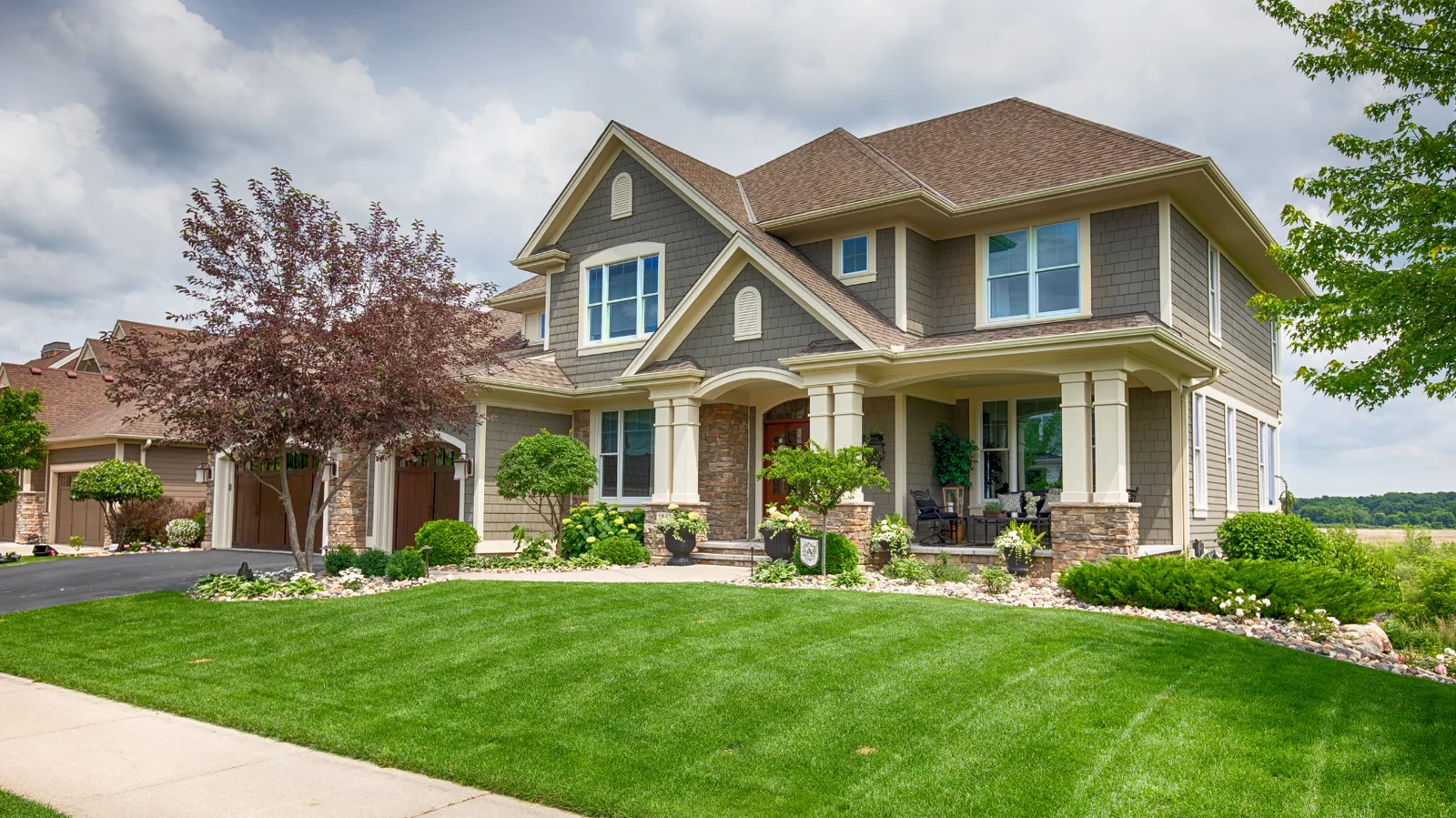
Roofing Services in Fairview, TX
Roof repair, roof replacement and inspection help for your Fairview home. Explore the work that fits your concern, or start with a free inspection.
Free roof inspections for Fairview homes and commercial properties.
Roofing services for your Fairview property
Find help for a house roof or a commercial building. Each service explains what the work involves, when it fits and what can change its scope.
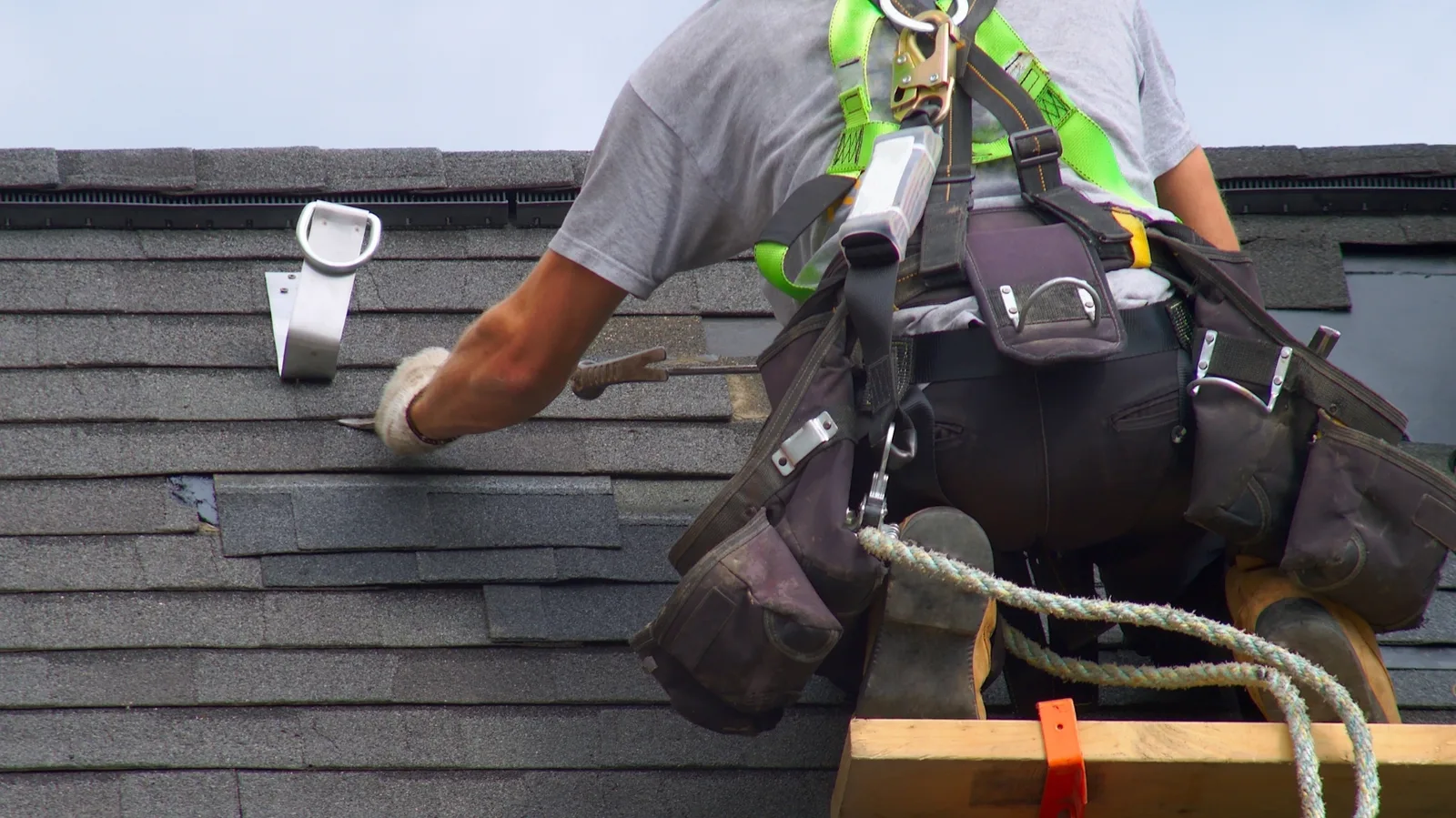
Roof repair
Leaks, damaged shingles and the flashing or vent details behind them.
Explore roof repair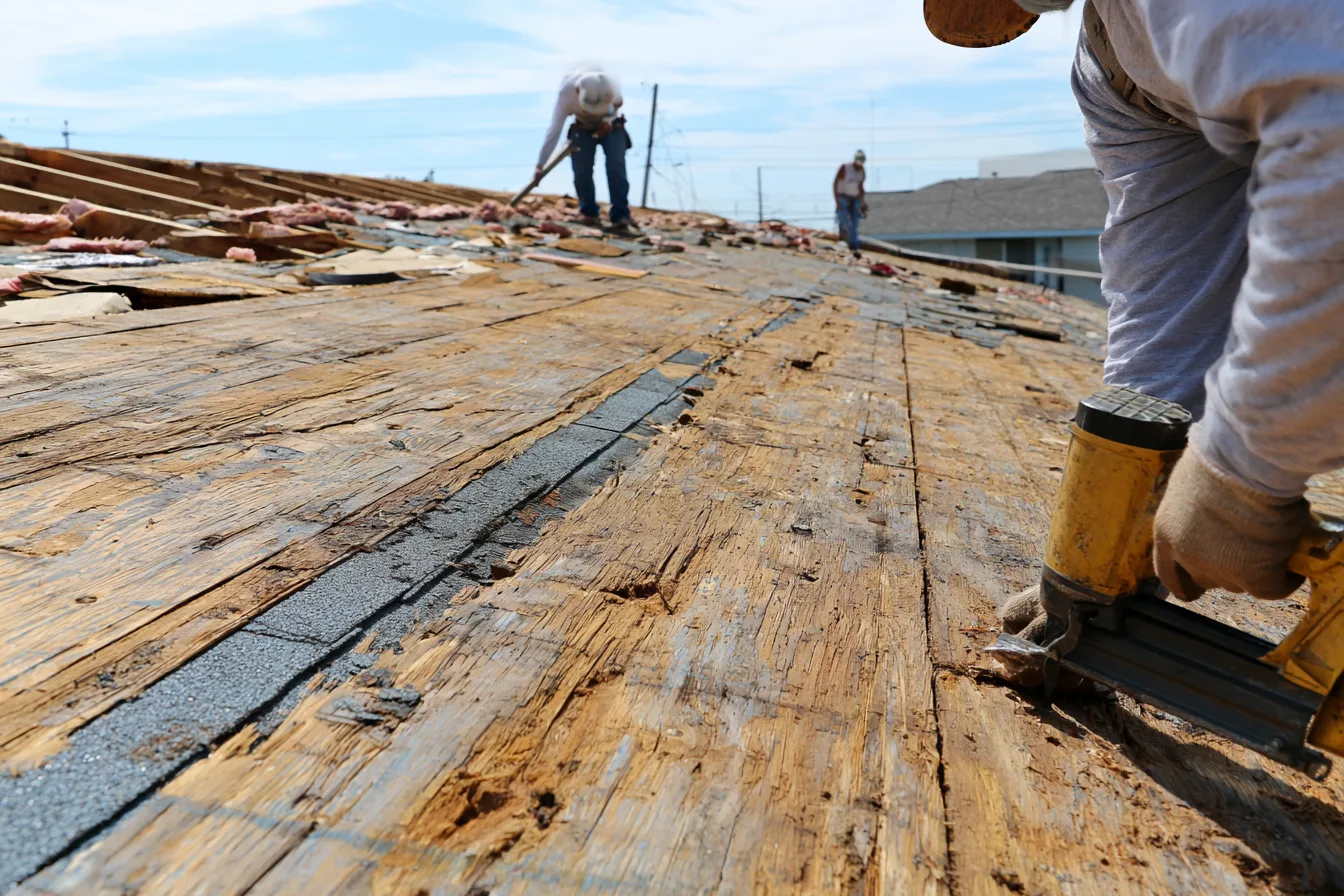
Roof replacement
Tear-off, deck condition and rebuilding the covering as a complete assembly.
Explore roof replacement
Roof inspection
Accessible roof conditions, warning signs and questions after a change.
Explore roof inspection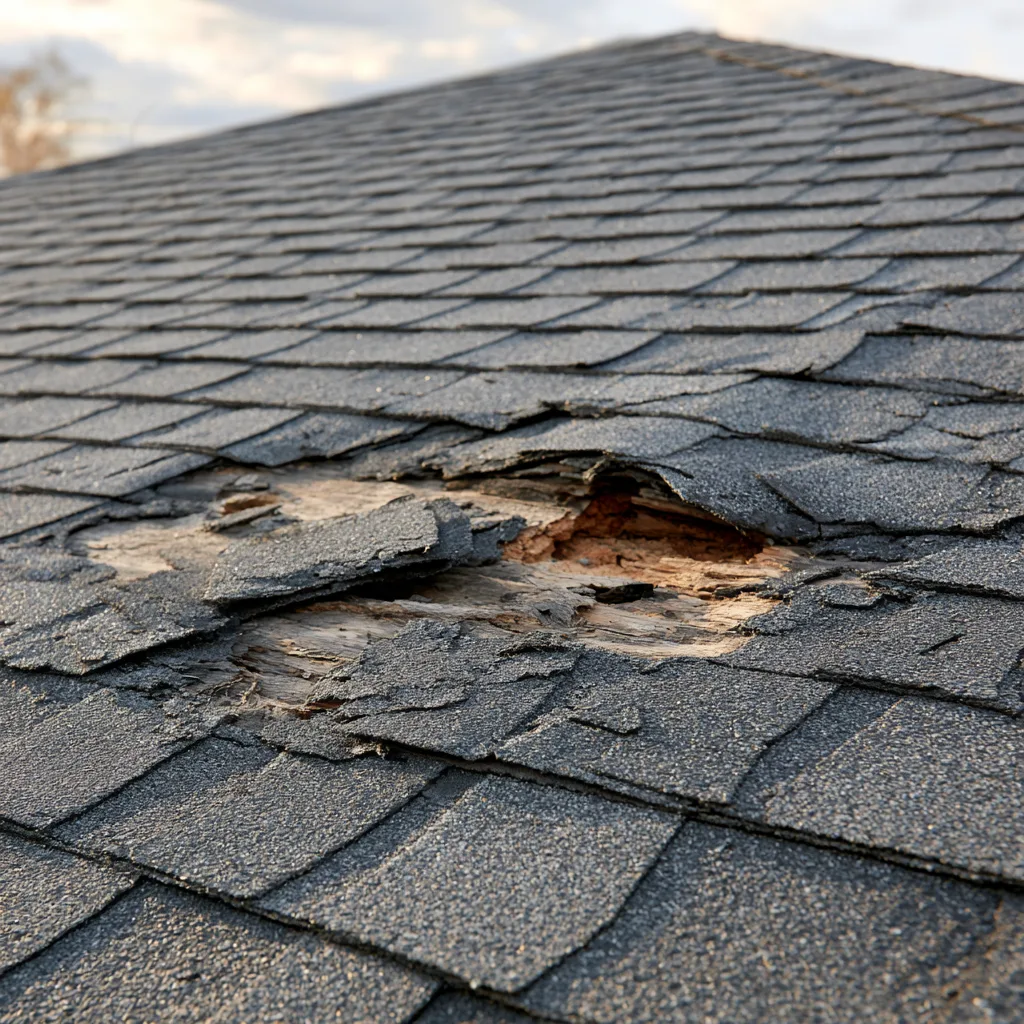
Storm damage
Wind and hail damage, safe first steps and repair decisions.
Explore storm damage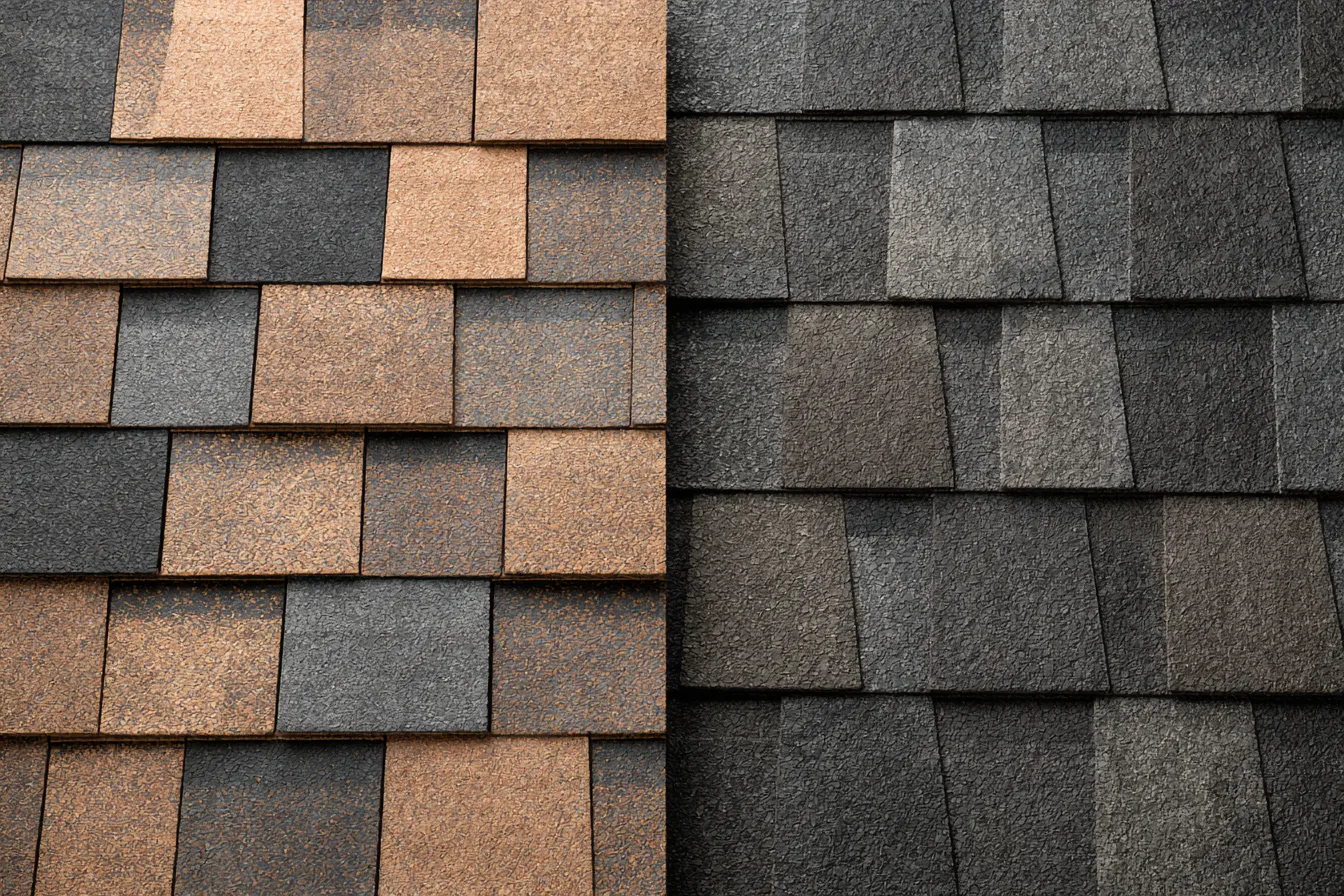
Shingle roofing
Compare shingle construction, appearance and product-specific ratings.
Explore shingle roofing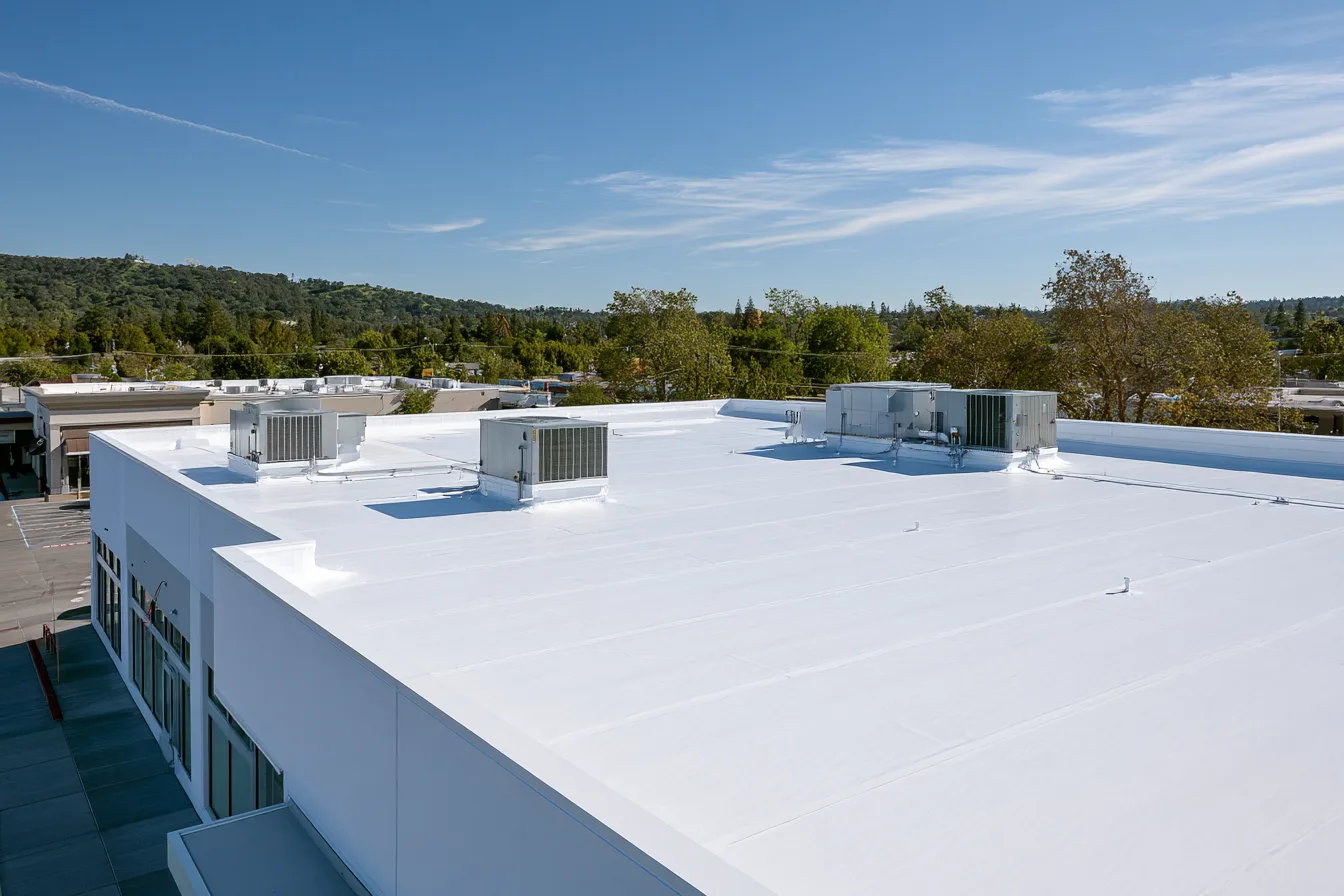
TPO roofing
Membrane seams, attachment and repair or replacement of the system.
Explore tpo roofing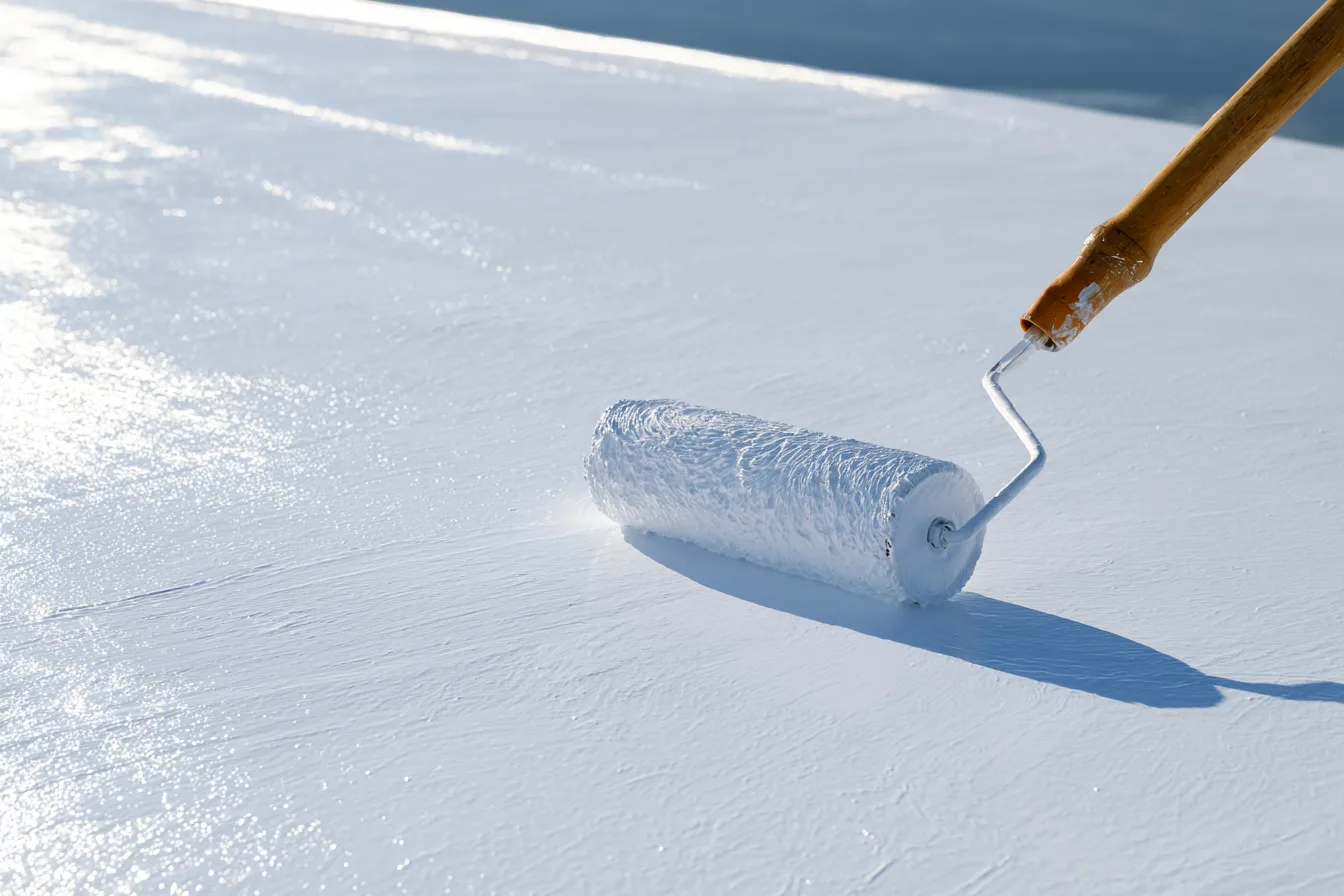
Roof coatings
Roof suitability, preparation and the limits of surface restoration.
Explore roof coatings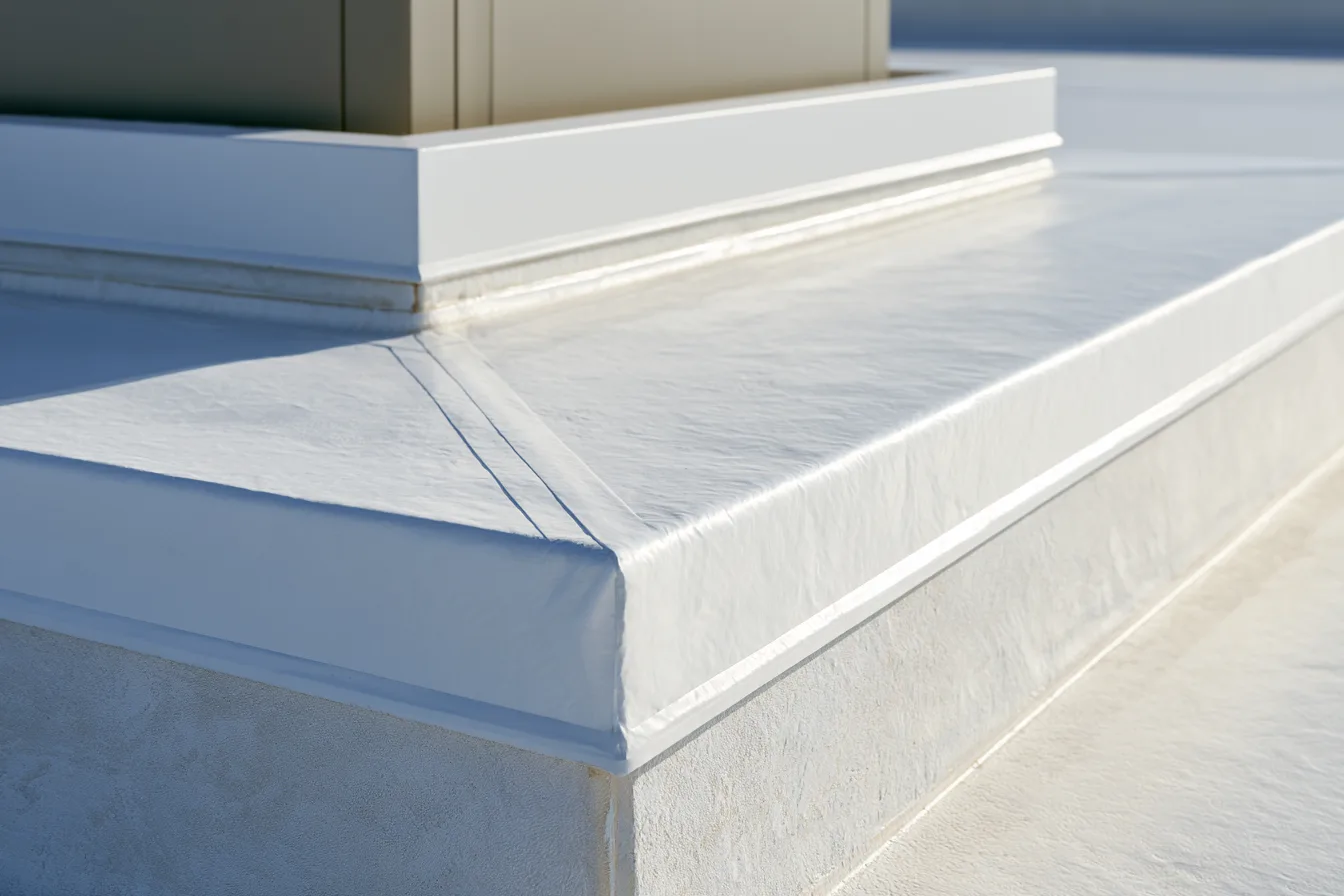
Flat roof repair
Leak tracing, compatible repairs and wet layers beneath a membrane.
Explore flat roof repairFind the right roofing help in Fairview
A repair restores a failed part of an otherwise serviceable roof. Replacement addresses broader deterioration or an assembly that cannot support a dependable repair. An inspection helps distinguish those situations by checking the covering, its connections and accessible signs of damage.
You can also plan ahead. A material change, a home improvement or a roof that has become harder to maintain can be a reason to discuss replacement before the next leak. The roof’s current condition and the result you want both belong in the conversation.
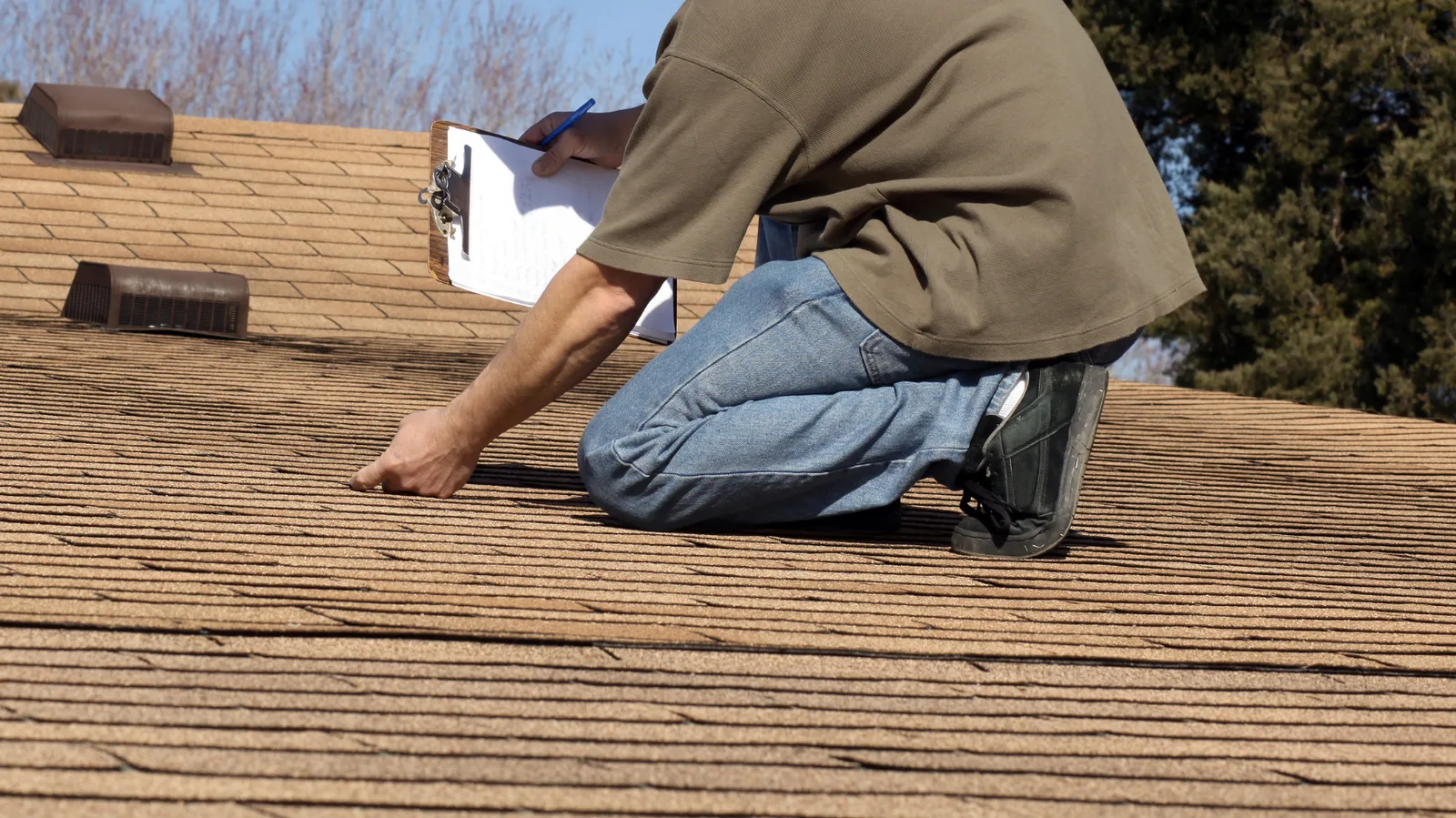
A leak, a storm or a roof ready for bigger work
A small opening can let in a surprising amount of water. Widespread wear can be harder to notice. The amount of work follows the roof condition, including the material around the problem.
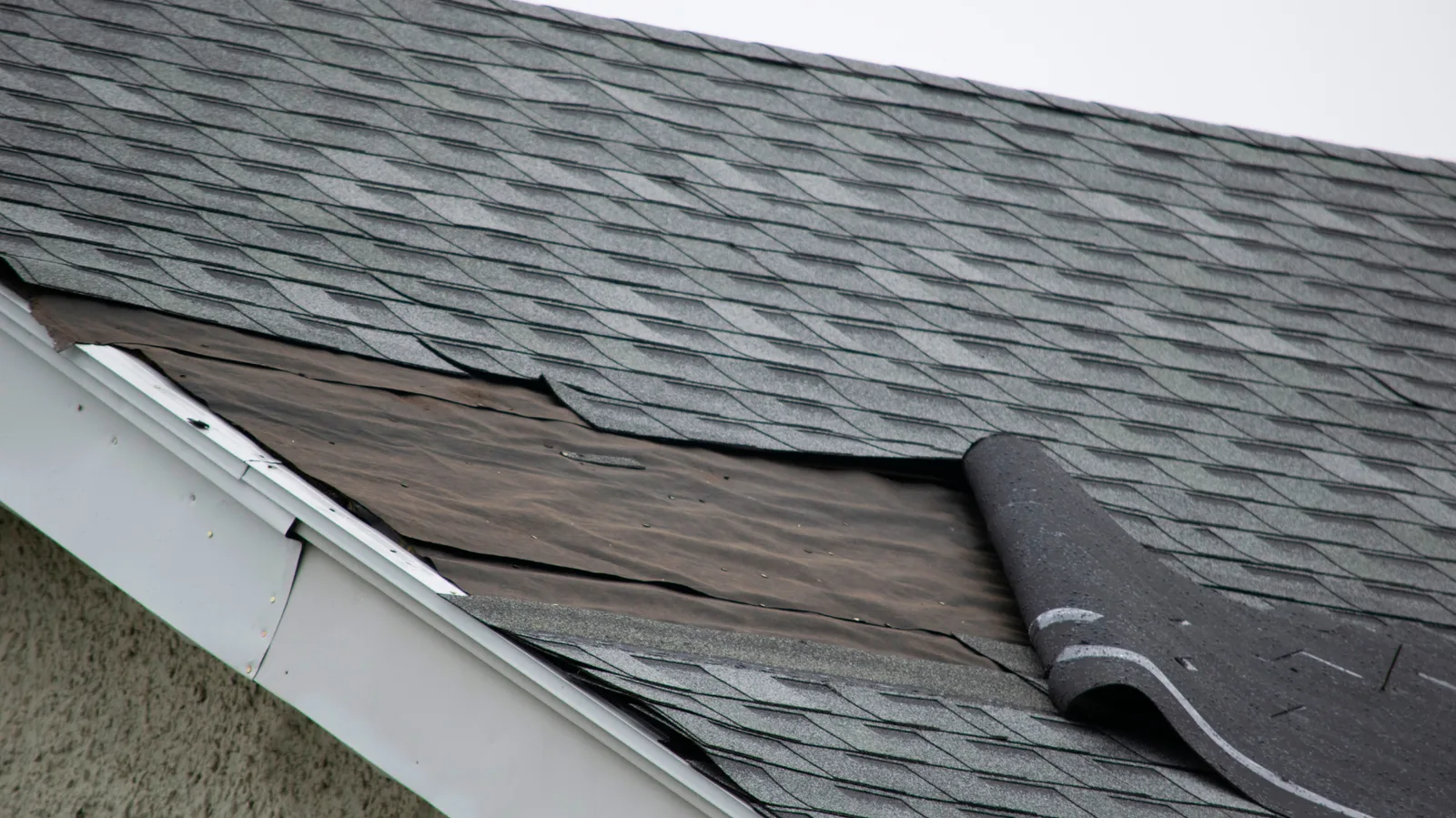
One part of the roof has failed
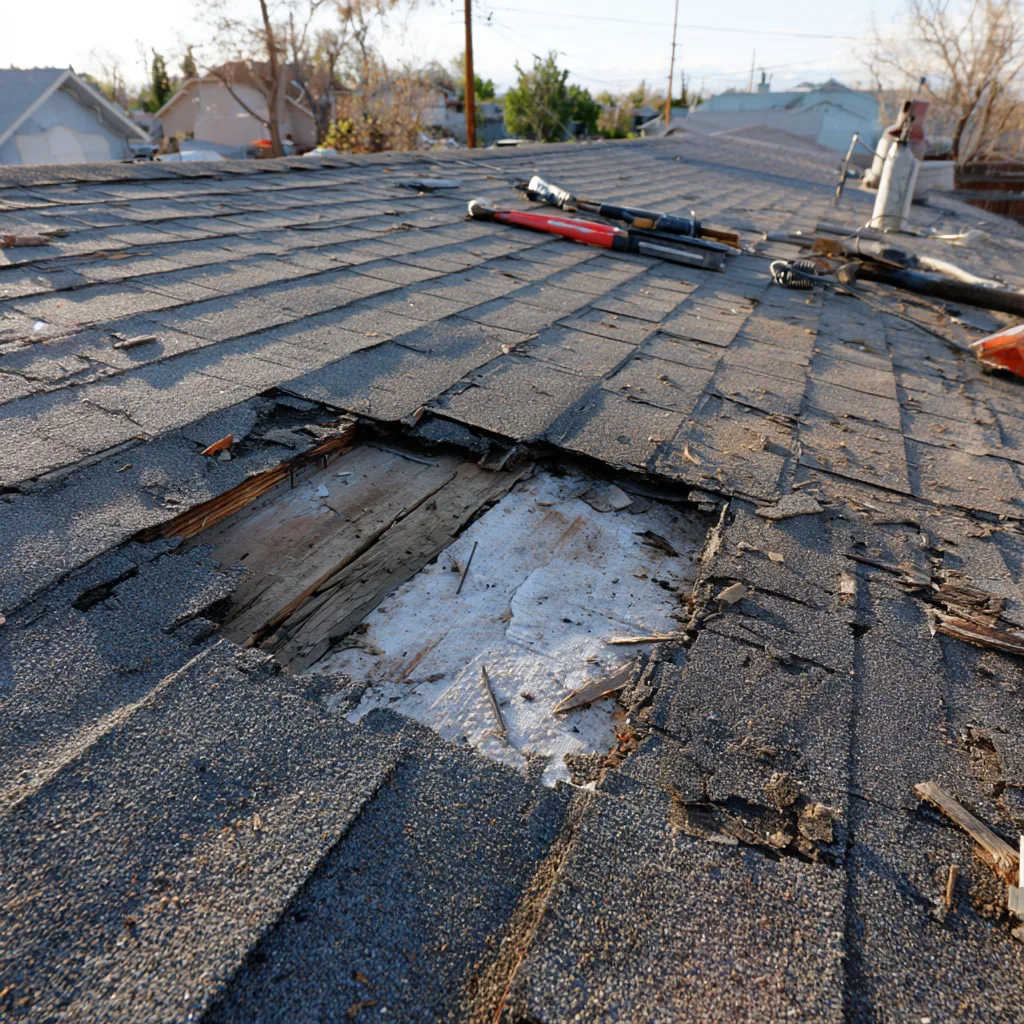
A missing shingle, a split vent collar or flashing pulled away from a wall can be a local failure on an otherwise serviceable roof. Repair opens enough covering to reach the failed detail, rebuilds it and joins the new material to sound roofing around it.
With a leak, that work starts by tracing the entry. Water can travel along the underside of the deck or a framing member before appearing on the ceiling. Vents, walls, chimneys and valleys are useful places to investigate, rather than assuming the opening sits directly above the stain.
- Roof repairLeaks, damaged shingles, flashing, vent boots and the wood beneath them.
- Repair or replacement guideExplore what makes a repair grow past one visible defect.
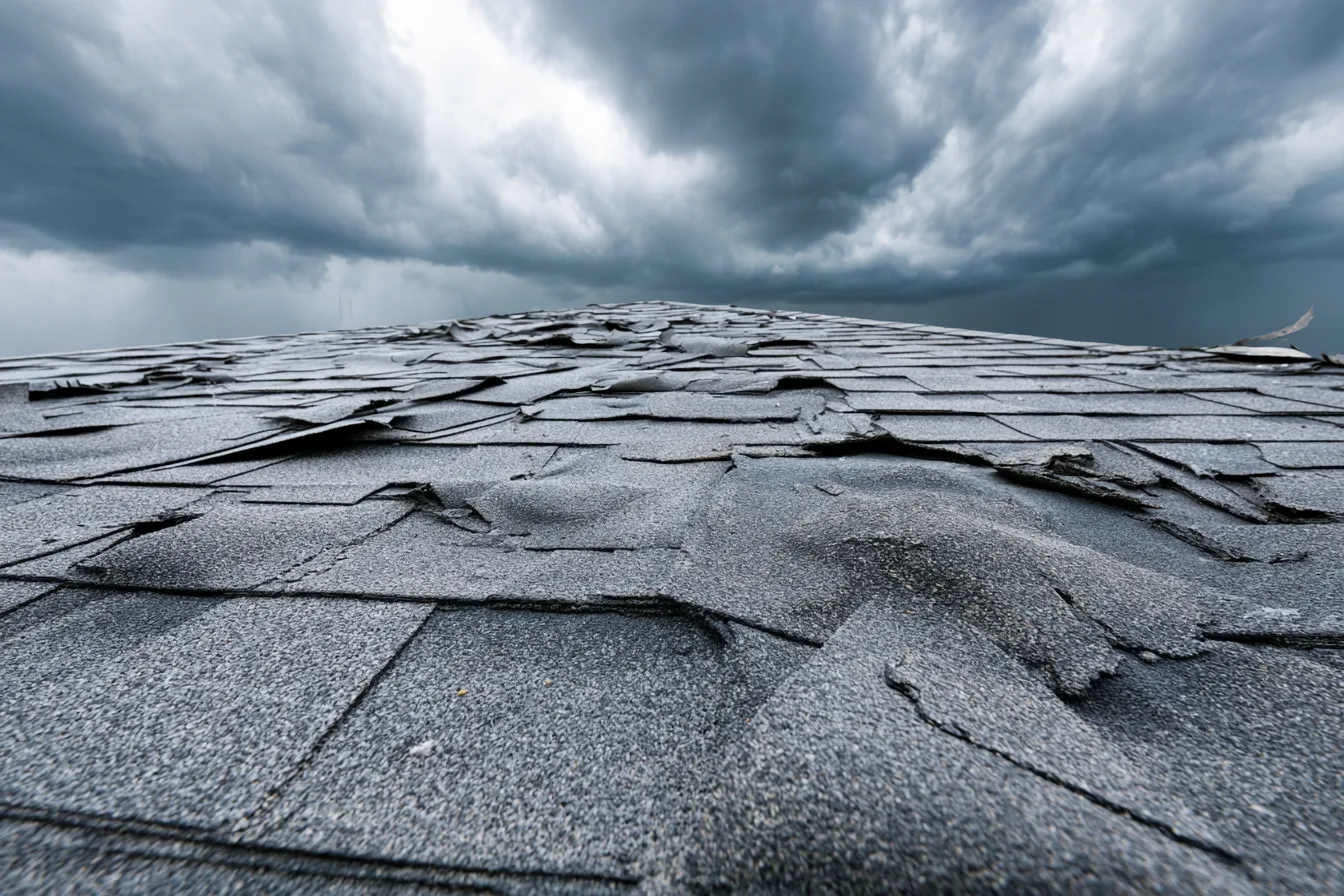
Something changed and you are not sure what it means
A lifted edge, granules under a downspout or a night of hail and wind gives an inspection a place to start. The condition of the shingles, their attachment and the surrounding flashing helps establish whether work is needed and how much. Roof access and concealed layers can limit what is visible.
Wind can break shingle seals, crease tabs or tear material away. Hail can dislodge granules and damage the underlying mat. A weather report describes the storm; the roof needs its own assessment before attributing damage or choosing a repair.
- Free roof inspectionsCheck accessible roof conditions and discuss the findings.
- Storm damage roof repairWind and hail damage, safe first steps and the insurance question.
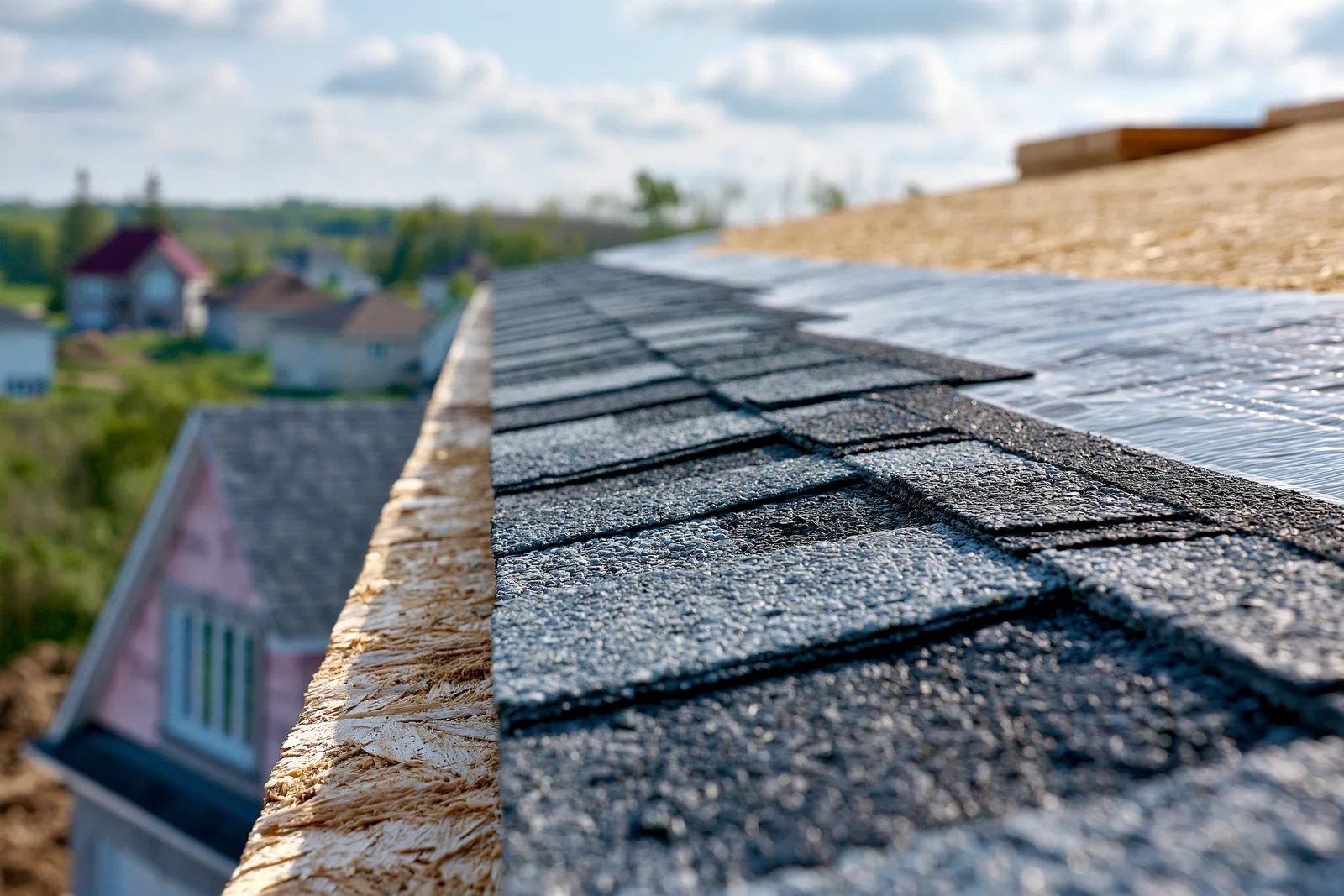
The roof is wearing out in more than one place
Brittle shingles across several slopes or repairs that keep reaching deteriorated material can make replacement worth considering. A tear-off removes the covering so the exposed deck can be checked and the roof assembly rebuilt. The proposal should identify the layers being removed and the details being renewed.
Replacement also brings material choices: shingle profile, color, tested performance and warranty terms. Those decisions belong alongside deck condition, ventilation and the work needed at walls, vents and edges. A more expensive shingle does not correct a poorly resolved roof detail.
- Roof replacementWhat comes off, what goes back and what changes the cost.
- Shingle typesThree-tab, architectural and designer profiles, color and ratings.
- Fairview roof permit guideWhere the town’s current permit instructions live.
The roof work behind the price
A roof price needs a defined scope. Replacing a damaged shingle, rebuilding a wall joint and replacing a complete covering involve different amounts of removal, material and labor. A proposal should show where that work starts and stops.
Surface and accessible attic checks can reveal useful conditions, but covered layers may still hold surprises. Before work starts, discuss how additional damage would be assessed, priced and authorized if it is exposed. Compare those assumptions alongside the quoted work.
What a roof scope spells out
- What was found
The part that failed and where it is. A cracked vent boot on the rear slope, step flashing loose where the garage roof meets the wall, brittle shingles across the south side.
- What comes off
The affected area and the layers to be removed. A repair may open several surrounding courses; a tear-off replacement can include more than one existing shingle layer. The actual proposal should identify that extent.
- What goes back
The proposed covering and its supporting details: deck work where needed, underlayment, edge metal, wall and chimney flashing, roof openings, ridge caps and ventilation. Product instructions and the roof layout govern their installation.
- What stays
Anything being reused, such as sound decking, gutters or a chimney cap, so nobody assumes it was replaced.
- What cannot be seen yet
Covered decking and other concealed connections may need more work after opening. The proposal should explain the basis for additional charges and how changes are agreed, rather than treating an inspection as a complete view of hidden conditions.
- The property during the work
Where materials and the debris trailer sit, how plants, windows and the driveway are protected, and how nails get picked up at the end.
Permit needs depend on the address and the work. The Fairview roof permit guide points to the town’s current instructions.
Commercial roofing for Fairview buildings
Low-slope roofs depend on a continuous watertight surface and a clear path to drains or scuppers. A seam, rooftop curb or drain connection can be the source of a leak even when the surrounding membrane looks intact.
For an owner or property manager, the roof is also an operating issue. Access, loading areas, tenant entrances and rooftop equipment affect how work can be staged. The system and the condition of the layers beneath it determine which roofing options fit.
- Flat roof repair
A seam, curb corner or drain detail needs a repair compatible with the existing membrane. Wet insulation must be identified and addressed; covering the surface does not dry the layers beneath it. See flat roof repair for how leak location and the affected assembly change the work.
- TPO roofing
TPO is a single-ply membrane with heat-welded seams, commonly seen in white. The roof assembly includes its substrate, insulation, attachment and flashing details. A weld repair, new curb flashing and complete replacement address different conditions. Explore TPO roofing and the decisions behind each scope.
- Roof coatings
A coating may restore a suitable roof after defects and wet areas are addressed. Membrane compatibility, attachment, adhesion and drainage also matter. Preparation can be a substantial part of the job, and some roofs need replacement instead. Read about commercial roof coatings and preparation.
- Working around the building
Occupied buildings need practical arrangements for access and protection. Equipment service paths, debris removal and any work around tenant activity belong in the project discussion before installation is scheduled.
What shapes the cost of roof work in Fairview
The price follows how much roofing has to be opened and rebuilt, the material selected and the setup needed to reach it. An inspection can narrow those questions, while concealed work may remain an allowance or agreed change.
- How much comes apart
A vent-boot repair opens the surrounding courses. Rebuilding a wall joint can disturb a longer run of shingles. A tear-off replacement removes the specified covering layers across the agreed roof area. Labor and material follow that extent.
- Pitch and height
Steep slopes, multiple stories and restricted access can require additional safety equipment, staging and handling. Two repairs of similar size can involve different amounts of labor because of where they sit.
- Hidden wood
Decay, loss of fastening strength or other damage can require decking replacement. A water stain alone does not establish that need. Concealed wood, additional covering layers and inaccessible details can all change the work once opened.
- Material and warranty
Shingle lines differ in price, look and rated performance. A manufacturer warranty covers the product and carries its own conditions. Workmanship coverage is a separate set of terms for the installation itself.
Tell us what your roof needs
A new leak, damaged shingles or a roof you have been putting off: tell us what you have noticed. Request a free inspection to discuss the condition and the work your roof may need.
Call (469) 424-9922