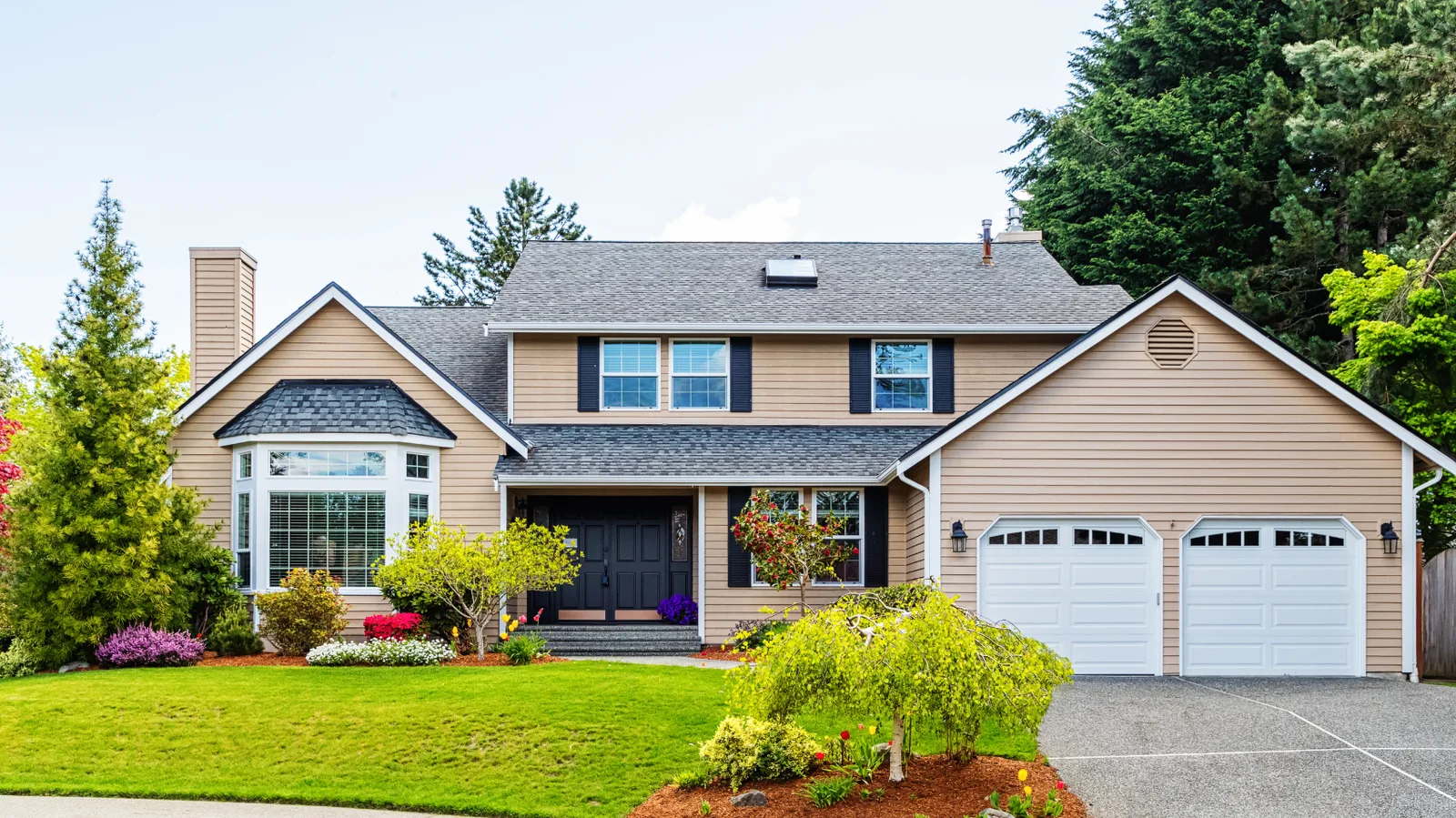
Roof Replacement in Fairview, TX
Plan a roof replacement around the condition of your Fairview home, the complete roof assembly and the finish you want. Begin with a free inspection.
Free roof inspections for Fairview homes and commercial properties.
When a Fairview roof is ready for replacement
A replacement becomes useful when the existing covering can no longer serve as a reliable base for repairs. Shingles may be brittle across several slopes, repeated leaks may reach beyond individual details, or removal may be needed to address damage below the surface. The extent matters more than a birthday alone.
The inspection helps establish that scope. If the problem is limited, repair remains part of the discussion. When replacement is the better way to resolve the roof’s condition, the plan should explain what comes off, what stays and what needs attention before new shingles go on.
What a Fairview roof replacement includes
A new roof is assembled in layers and at connections. The sequence is what makes those parts work together.
Shingles are the part you see. Most of what keeps water out is underneath them or beside them.

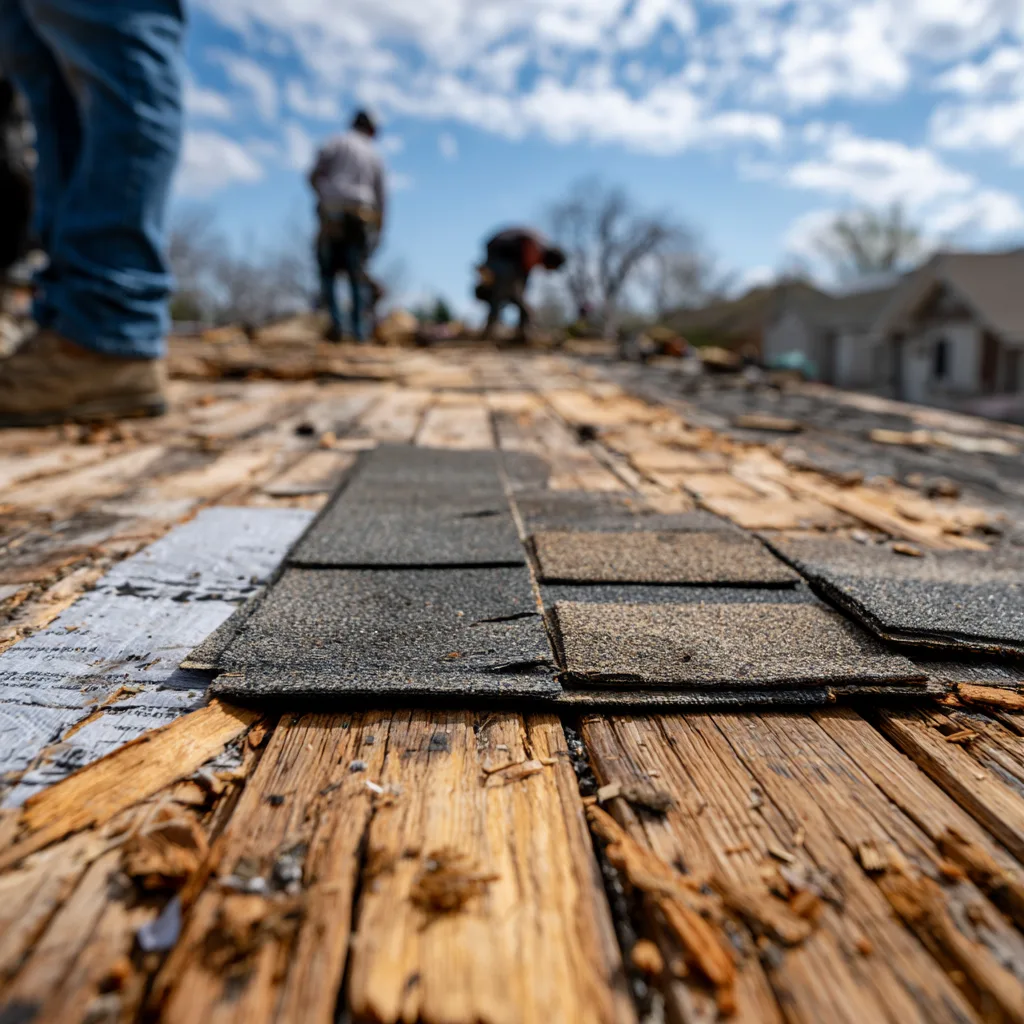
Tear-off
The old shingles, underlayment and worn flashing come off down to the wood. Going over an old layer hides the deck and leaves every old problem in place, so a full tear-off is what makes the rest of this list possible.
The deck
Decking is the plywood, OSB or plank surface nailed to the rafters, and every shingle nail depends on it. Once it is exposed, soft, delaminated or broken sections are replaced so the new roof has something solid to fasten into.
Underlayment and leak barrier
Underlayment is the sheet layer between the wood and the shingles. It is the backup when wind-driven rain gets under a shingle. Valleys, eaves and the areas around openings can get a self-sealing membrane that closes around the nails passing through it.
Edges and starter course
Drip edge is the metal strip along the eaves and rakes that keeps water from curling back onto the fascia board. A starter course along the edge gives the first row of shingles a sealed line to bond to, which matters in wind.
Flashing, valleys and openings
New metal goes in where the roof meets walls and chimneys, valleys are lined, and every plumbing vent gets a new boot. Tired flashing left under new shingles lets an old leak survive the replacement.
Shingles, ridge and ventilation
Shingles go on from the eave up, nailed on the manufacturer’s line. Ridge caps finish the peaks. Attic ventilation is set up so air comes in low at the soffits and leaves high near the ridge, which helps the attic shed heat and moisture.
The roof is more than the visible shingles
At a wall, shingles alone cannot keep water from entering the joint. Flashing needs to lead water back out onto the roof, including where that roof ends beside the wall. Replacing a broad field of shingles while leaving a failed connection in place can preserve the original leak.
Ventilation belongs in the same project conversation. Intake and exhaust paths must work together with the roof and attic arrangement. Adding an exhaust vent without understanding where replacement air can enter is not a complete ventilation plan. These are system details to resolve for the home, not accessories chosen only by appearance.
A Fairview roof replacement from delivery to cleanup
Here is what the job looks like from the driveway, in the order it happens.
Set up the property
Shingles are delivered and a trailer or dumpster is placed where it won’t block you in. Tarps and plywood protect plants, AC units, windows and the driveway near the work. It helps to move cars out of the garage before the first shingle comes off.
Tear off the old roof
Old roofing is stripped to the deck a section at a time, so no more of the house is open than can be covered again if the weather turns.
Check and repair the deck
With the wood exposed, every sheet or board gets looked at and walked. Soft or broken pieces are cut out and replaced, and loose decking is refastened to the rafters.
Dry the roof in
Underlayment, leak barrier and drip edge go on first. From this point the house is protected from rain even before any shingles are down.
Install flashing, shingles and ridge
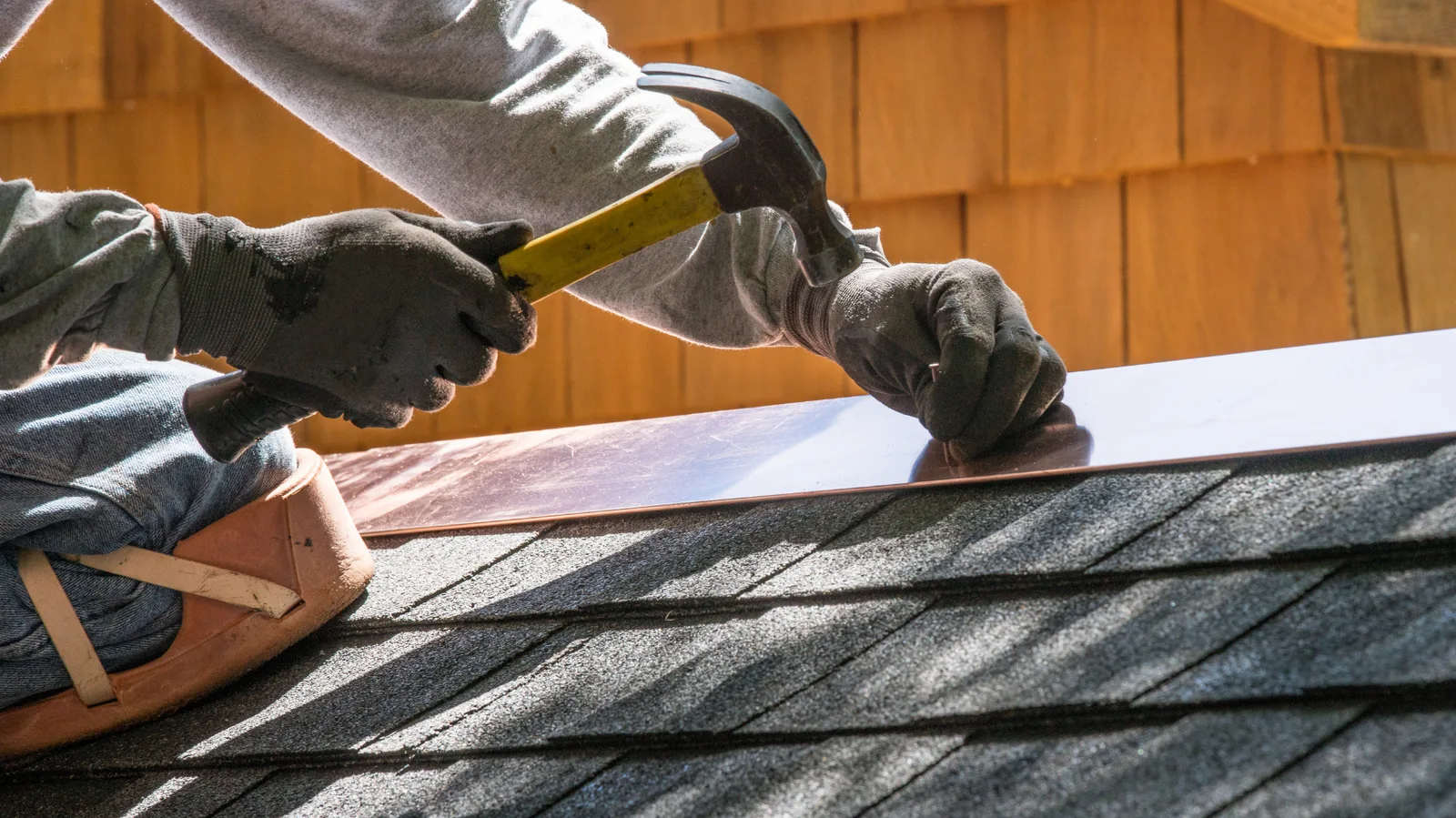
Metal goes in at walls, chimneys and valleys as the courses reach them. Vents and boots are set, the field is shingled, and ridge caps and ridge vent close the peaks.
Clean up and look it over
Debris goes into the trailer as the work moves. Gutters are cleared, and a magnet is run over the lawn, beds and driveway for nails. A last look at the roof and the ground closes the job.
What changes roof replacement cost in Fairview
Two houses with the same floor plan can carry very different roofs. These are the differences that move the price.
Roof size and shape
One or two broad slopes with few interruptions. Material goes on quickly with little cutting.
Several small slopes, valleys, dormers and wall junctions. Each one needs flashing, cuts and time, even when the total area is the same.
Pitch and height
A walkable pitch on a single story.
A steep or two-story roof needs more safety setup, and materials move more slowly.
What must be removed or repaired
One layer of shingles over a sound deck.
Two layers to strip and haul away, failed flashing to rebuild, or decking that turns out to be soft once it is exposed.
Material and complete scope
A standard architectural shingle with its matching underlayment and accessories.
An impact-rated or designer shingle, upgraded underlayment or added ventilation work.
Compare what each project includes, such as disposal, flashing, ventilation and any permit work, not a shingle price against a whole-roof price. The Fairview roof permit guide covers the town’s side.
Where roof repair ends and replacement begins
Age alone does not settle it. What matters is whether the roof around a problem can still be worked on. If shingles flex when they are lifted and the deck is firm, a repair ties in cleanly and the rest of the roof keeps doing its job.
The picture changes when the same slope has been patched more than once, when shingles crack as soon as they are touched, or when leaks show up in unrelated parts of the house. Each repair then costs more and fixes less. That is when it is worth seeing a replacement price next to the repair price and deciding with both in hand.
Our roof repair page explains how a repair joins the roof that stays, and the repair-or-replacement guide lets you explore the same question at your own pace.
Fairview roof replacement FAQs
How long will my roof replacement take?
The roof’s size, complexity, weather and findings during removal all affect the schedule. The project can be sequenced once its scope is known; an exact duration is not established by the home’s floor area alone.
Will I need a permit in Fairview?
The answer follows the property and proposed work. Our Fairview permit guide points to the current town instructions and explains how permitting fits the roof scope.
Does a shingle warranty cover installation too?
Product-defect coverage and workmanship coverage are different. The particular warranty, eligibility requirements, exclusions and installer terms establish the coverage. A long product warranty does not by itself promise labor coverage for every roof problem.
Could part of the roof be repaired instead?
Yes, when sound surrounding material and workable connections support that approach. The roof repair page explains how a repair has to join the roof that remains.
Tell us what your roof needs
Bring the roof you have and the result you want into the same conversation. Request a free inspection to begin planning.
Call (469) 424-9922