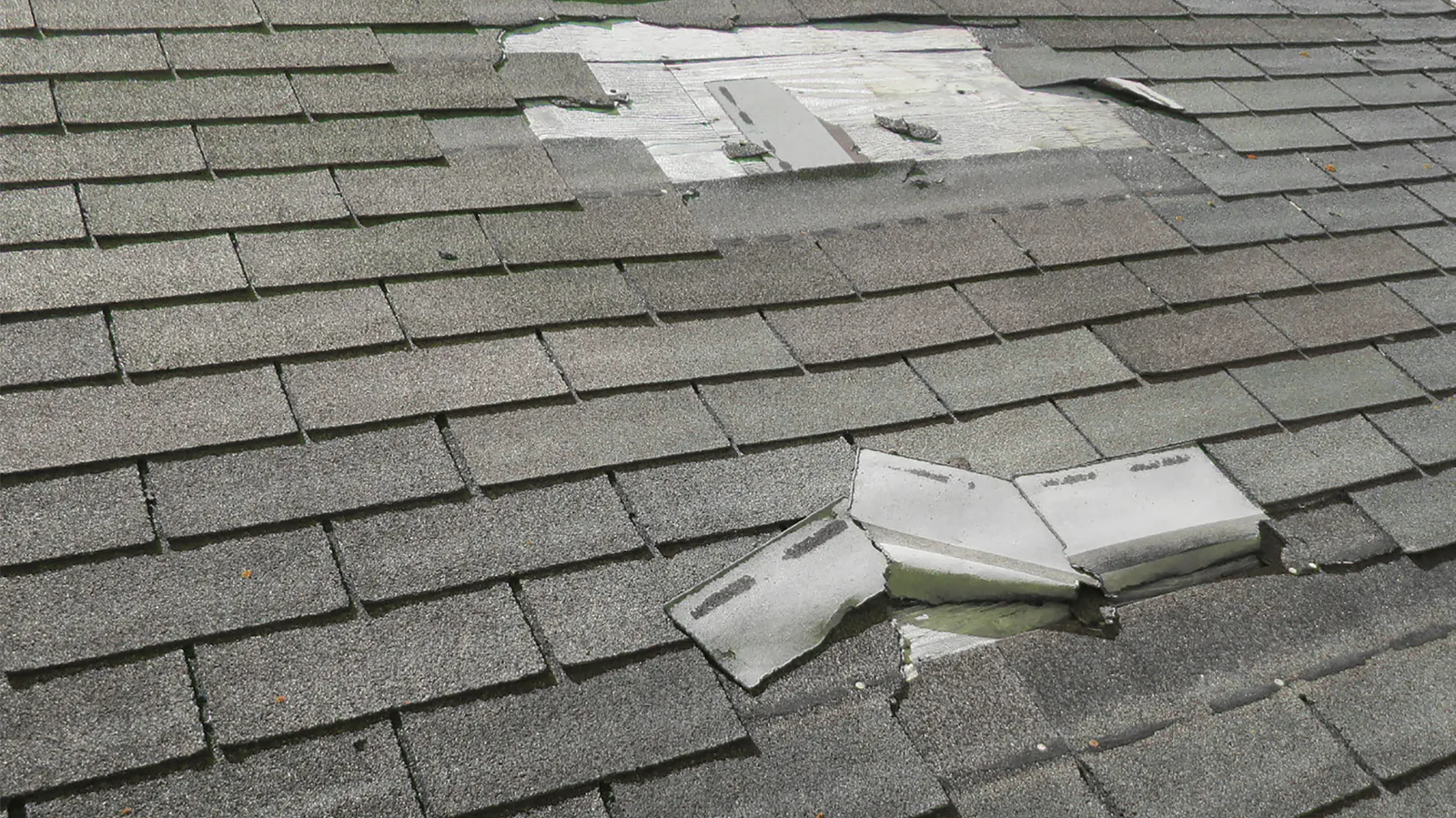
Storm Damage Roof Repair in Fairview, TX
Get help with a Fairview roof affected by wind, hail or storm debris. A free inspection connects the damage on the roof with the work it needs.
Free roof inspections for Fairview homes and commercial properties.
Check the Fairview roof, not just the yard
A storm can tear a shingle, lift its sealed edge or damage the surface without leaving the same evidence on every slope. Debris in a yard is a reason to pay attention, but it does not establish the damage on a particular roof. The inspection needs to look at the covering itself.
If water has entered, tell us where it appeared and whether it is still coming in. If you have only noticed damaged material from the ground, that is useful too. You do not need an active interior leak before asking for the roof to be checked.
How storm damage affects a Fairview roof
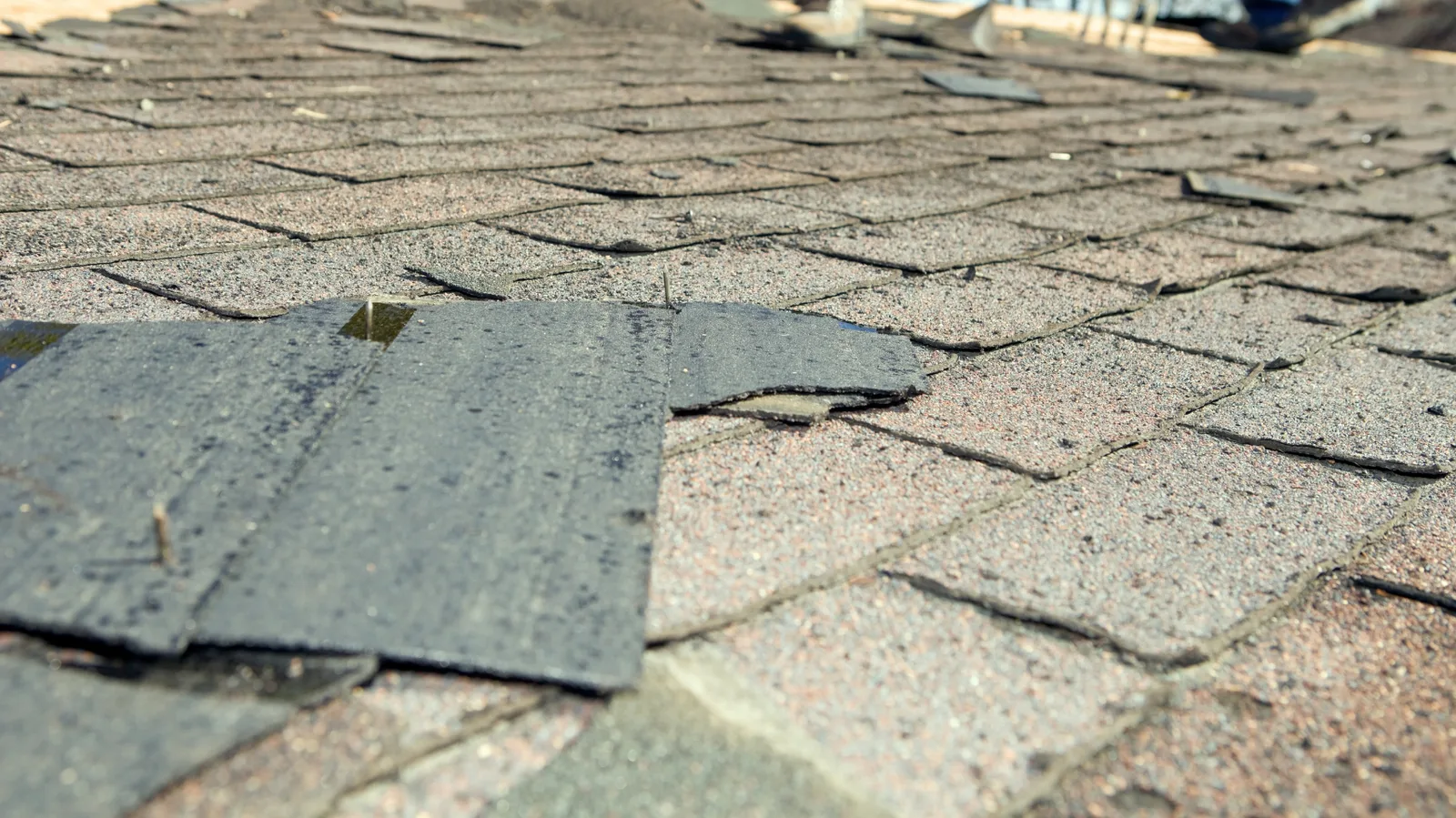
Shingles shed water because they overlap, remain attached and seal as intended. Wind damage can disturb those connections, leaving an edge vulnerable even when most of the piece is still there. A repair needs to restore the affected connection, not simply press the tab flat.
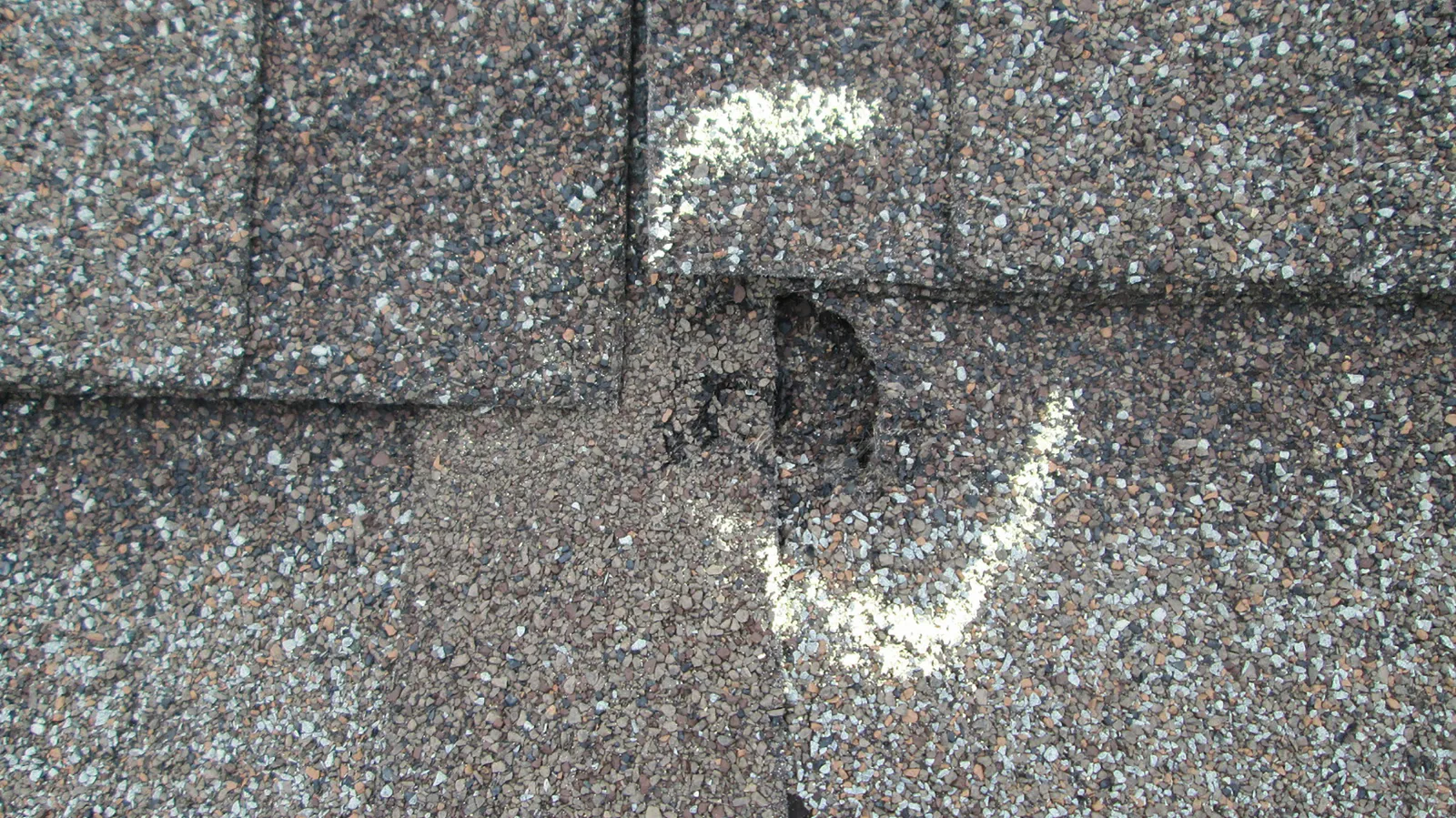
Impact damage raises a different question about the material itself. Lost surfacing can expose the asphalt, and a damaged reinforcement layer is more than a cosmetic scuff. Marks alone do not establish the cause or repair scope. The inspection considers their pattern and the condition of the surrounding covering.
Where a roofer looks after a Fairview storm
Storm damage can be quiet. The roof can look fine from the street and still have shingles that will not survive the next wind.
Creased and unsealed shingles
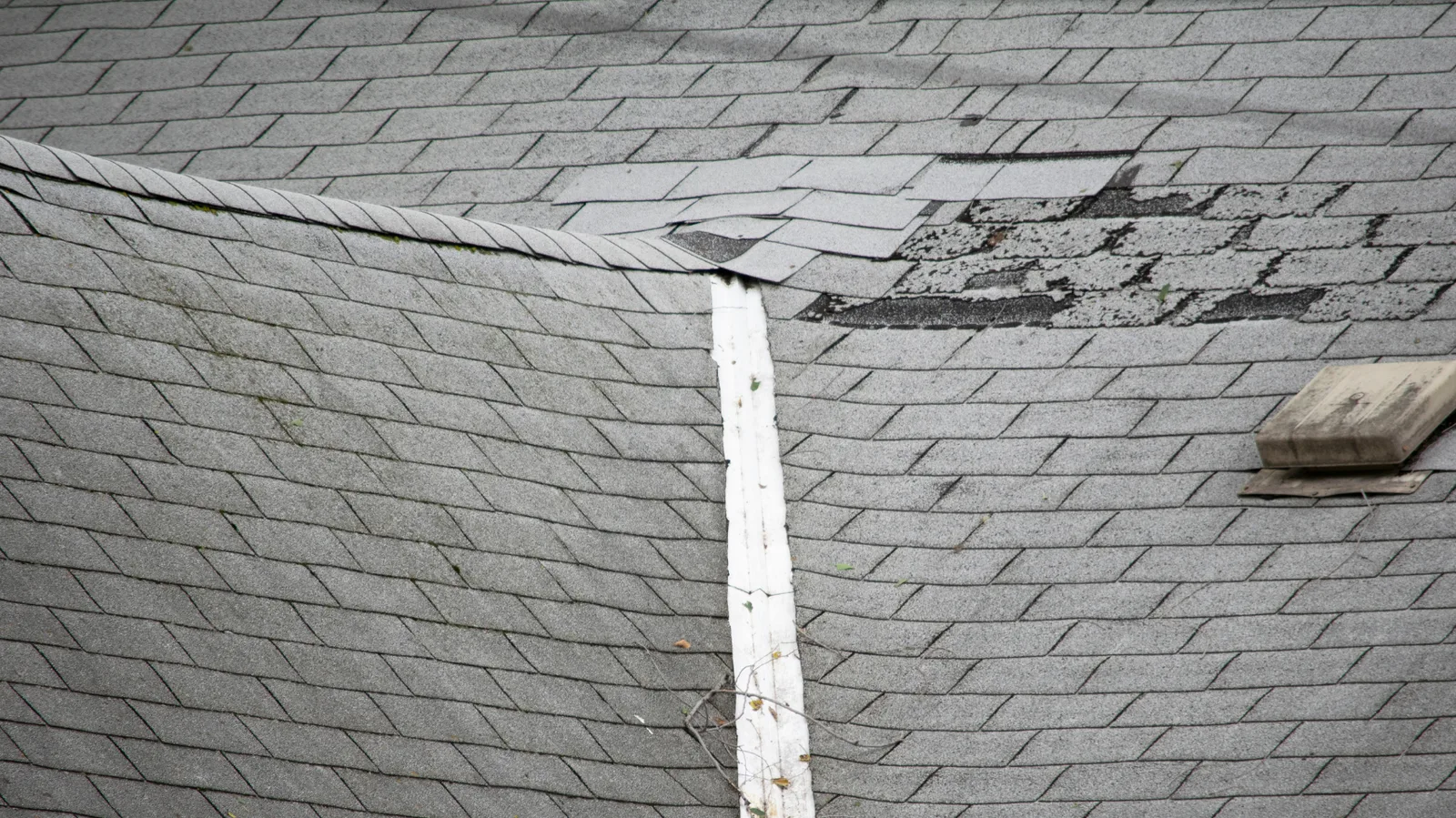
Wind lifts a shingle by its bottom edge. If the seal strip lets go, the tab flaps, creases along the top and eventually tears off. A creased shingle lies flat again when the wind stops, so it hides well. Up close the crease shows as a dark line where granules have cracked away, and that shingle will not reseal on its own.
Hail bruises and granule loss
Hail knocks granules off and can crush the mat beneath them. A fresh hit shows as a dark, soft spot about the size of the stone. Granules shield the asphalt from the sun, so a bruised shingle ages faster at that spot even when it is not leaking today.
Dents in soft metal
Vent caps, flashing, gutters and downspouts record hail well. Dents there help show the size and direction of the hail, and help tell fresh storm damage apart from ordinary wear.
Limbs and punctures
A limb can puncture shingles and decking or tear a gutter loose. Once it is removed, the hole is opened up so the deck and framing edge around it can be checked before the roof is closed again.
Ridge caps and flashing
Ridge caps take the most wind, and flashing can be bent or lifted where a gust gets under it. Both get checked even when the slopes look intact.
Getting help after a Fairview roof is damaged
- 01
Keep clear of the roof
Do not climb up to inspect or secure a cover yourself. Stay away from downed lines, loose debris and visibly damaged sections of the building.
- 02
Limit interior exposure safely
Move belongings away from a leak if it is safe to do so. Keep clear of sagging ceilings and water near electrical equipment. An unsafe building condition needs the appropriate emergency help.
- 03
Describe the concern and request help
Share the property address, what you noticed and whether water is entering now. Temporary protection and permanent repair are separate needs; the available next step depends on the roof and current conditions.
When Fairview storm damage is a repair and when it is more
Hail on your street does not mean a new roof, and a roof that is not leaking does not mean no damage. The extent of the damage and the condition of the roof around it set the work.
How much of the roof was hit
Damage on one slope or in a few spots, with sound shingles around it.
Hits, creases or missing shingles spread across every slope that faced the storm.
Condition of the shingles
Shingles that still flex, so new ones can be tied in without breaking their neighbors.
Older, brittle shingles that crack during the repair, so each fix keeps spreading.
What is underneath
Dry decking and intact underlayment below the damage.
Water already in the deck, or underlayment torn over a wide area.
The roof sets the repair. Your policy and insurer set the coverage. The next section keeps those two apart.
Roof repair and the insurance decision
The roof assessment establishes the physical work. The policy and insurer establish coverage and settlement.
- The repair does not decide the claim
Storm damage, ordinary wear and pre-existing conditions can raise different insurance questions. An inspection is not a promise that the insurer will fund replacement.
- The deductible remains part of the policy
Wind and hail deductibles can differ from other coverage. The owner’s actual policy sets that amount and the applicable terms; a roofing price is not a substitute for those details.
- Keep the useful records
Photographs taken safely, dates of discovery and receipts for temporary protection can help preserve what happened. The Texas Department of Insurance roof guide explains coverage and claim basics.
Fairview storm roofing FAQs
Does hail nearby mean my roof needs replacement?
No. The actual covering, the extent of damage and the ability to make a useful repair determine the roofing scope. A storm report for an area cannot inspect an individual roof.
What if the roof is damaged but it has not leaked?
The covering can be affected before water becomes visible indoors. Request an inspection of the damage rather than waiting for an interior stain.
Is temporary protection the finished repair?
No. A cover limits exposure while permanent work is addressed. The original defect and any disturbed roofing still need the right roof repair.
When can storm roof repairs begin?
The roof’s condition, safe access, weather and the work required affect timing. Describe any current water entry when requesting help so it is part of the discussion.
Tell us what your roof needs
Tell us what changed after the storm and whether water is entering. A free roof inspection is the starting point for the repair conversation.
Call (469) 424-9922